

Introduction
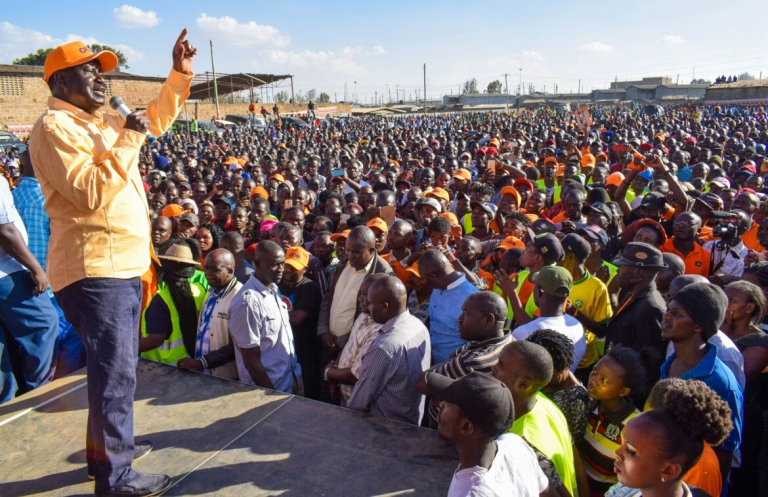
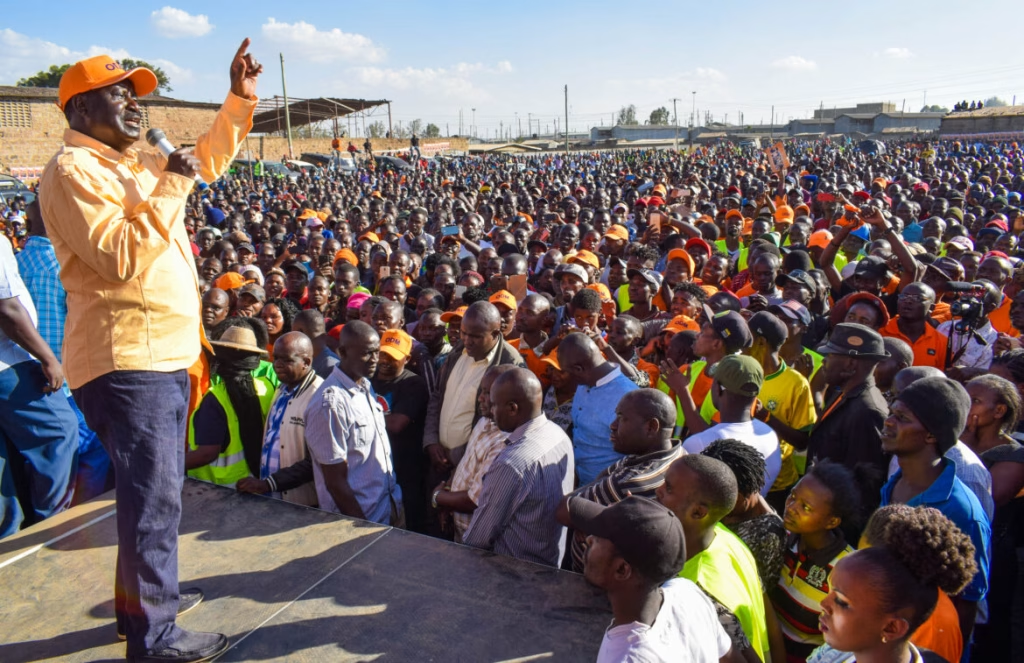
The Orange Democratic Movement (ODM) is one of Kenya’s most influential political parties. Formed out of the 2005 constitutional referendum, ODM has shaped national politics for two decades through reform efforts, strong grassroots mobilization, and its long-standing legacy under the leadership of the late Raila Odinga. Today, the party is navigating a period of major transition while maintaining its place as a key force in Kenya’s political landscape.
Party Profile & Background
Founding and Origin
ODM traces its origins to the 2005 constitutional referendum, where the “No” side used the orange symbol. The victory of this side led to the formal establishment of ODM as a political party ahead of the 2007 general election.
Ideology and Core Principles
ODM is rooted in social democracy, focusing on:
- Social justice and equality
- Human rights and inclusivity
- Good governance and accountability
- Strong devolution and empowerment of county governments
- Equity in resource distribution
The party positions itself at the centre-left of Kenya’s political spectrum.
Organisational Structure
ODM operates through a well-defined hierarchy:
1. National Delegates Convention (NDC)
The highest decision-making body, bringing together representatives from across the country.
2. National Governing Council (NGC)
Oversees party decisions between conventions.
3. National Executive Committee (NEC)
Responsible for daily management and execution of party decisions.
4. National Secretariat
Handles party administration, coordination, and communications.
5. Special Wings
- ODM Youth League
- ODM Women’s League
- Students League
- Disability League
- Veterans League
These arms help mobilise members at grassroots level.
Current Leadership (2025)
ODM is currently undergoing significant leadership transition following the death of its founder Raila Odinga.
Key leaders include:
- Acting Party Leader: Oburu Oginga
- National Chairperson: Gladys Wanga
- Deputy Party Leaders: Abdulswamad Nassir, Simba Arati, Godfrey Osotsi
- Secretary-General: Edwin Sifuna
- Youth League President: Johnmark Ketorah
This lineup reflects ODM’s attempt to broaden its regional influence across Nyanza, Coast, Kisii, Western Kenya, and urban areas.
ODM’s Electoral Footprint and Strongholds
Traditional Strongholds
ODM commands strong support in:
- Nyanza region (Siaya, Kisumu, Homa Bay, Migori)
- Parts of Western and Coast regions
These areas consistently deliver high votes for ODM candidates.
Urban Influence
ODM and its allied coalitions enjoy significant presence in urban areas such as Nairobi, attributed to strong youth support and established organizational networks.
Challenges and Weaknesses
- Limited penetration in Mount Kenya and Rift Valley
- Competition from newer, youth-focused parties
- Internal factionalism and loyalty struggles
- Need for generational renewal post-Raila era
Rising Figures to Watch in ODM
A new crop of leaders is shaping the party’s future:
- Abdulswamad Nassir: Strengthening ODM in the Coast region
- Simba Arati: Key power player in the Kisii region
- Gladys Wanga: Influential national chairperson with strong reform voice
- Edwin Sifuna: Vocal, influential party administrator and legislator
- Johnmark Ketorah: Youth League leader helping attract younger voters
These figures are expected to define ODM’s direction toward the 2027 election.
Latest ODM News (2025)
1. Death of Raila Odinga
The party suffered a historic blow with the passing of Raila Odinga, its founder and long-time leader. His death triggered national mourning and reshaped Kenya’s political landscape.
2. Funeral Stampede Incident
During Raila’s funeral events, a tragic stampede occurred, causing deaths and injuries. This drew attention to national security and crowd management at high-profile events.
3. ODM’s 20th Anniversary
ODM marked 20 years since its formation with major national celebrations. The scale of the events demonstrated the party’s intent to re-energize its base and reclaim national presence.
4. Internal Party Warnings and Discipline
ODM leadership recently cautioned some members accused of attempting to “sell” the party to rival formations. This indicates ongoing internal divisions following the leadership vacuum.
5. Killing of ODM MP Charles Were
The targeted killing of ODM Member of Parliament Charles Were shocked the nation. Police termed it a premeditated attack, raising concerns about political safety during tense transition periods.
Strategic Outlook for ODM Ahead of 2027
ODM’s future direction will focus on:
1. Leadership Renewal
The party must manage a smooth transition after Raila’s era while balancing continuity and generational change.
2. Strengthening Devolution and Policy Visibility
Highlighting success stories in ODM-led counties will improve the party’s performance narrative.
3. National Expansion
ODM will prioritize expanding influence in:
- Coast
- Kisii
- Nairobi
- Parts of Rift Valley
- Some urban centres
4. Youth and Women Mobilisation
Kenya’s young population remains a powerful voting bloc. ODM’s youth and women wings are central to its future growth.
5. Coalition Building
Given Kenya’s coalition-driven politics, ODM must craft alliances strategically ahead of the 2027 polls.
Conclusion
ODM remains one of Kenya’s most enduring political parties, with deep roots in reform, social justice, and grassroots activism. Despite the challenges brought by the passing of Raila Odinga and emerging internal divisions, the party continues to command a large national following. Its future now hinges on strategic renewal, leadership stability, youth engagement, and regional expansion as the country heads toward the next general election.
Related story https://www.whispers.co.ke/1323/celebrities/2025/edwin-sifuna-from-legal-expert-to-nairobis-influential-senator/
