

Early Life & Musical Beginnings
Newton Kariuki Ndwiga — better known by his stage name Newton Karish — hails from Karambari village in Mbeere North, Embu County.
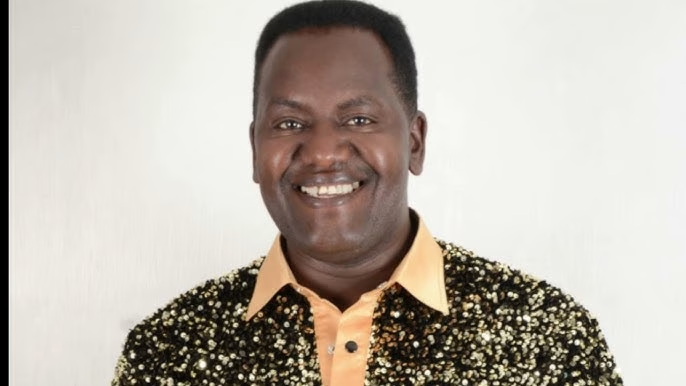
From an early age, Karish showed musical inclination. While still in primary school, he began composing songs; as he grew older, his musical style matured into a distinctive blend of local Embu and Kamba rhythms, storytelling guitar solos, and socially conscious lyrics.
His early education included time at Kegonge Secondary School, where he performed well academically. However, due to financial constraints, he discontinued his studies and turned to work and music as his path forward. Through consistent performances across counties like Embu, Meru, Kitui, and Machakos, Karish became a well-known figure in central Kenya’s music scene.
Music Career & Social Impact
Before entering politics, Karish built a long and notable career as a benga musician. His songs — with earthy lyrics, social commentary, and relatable storytelling — resonated with many rural listeners who saw their lives, challenges, and hopes reflected in his music.
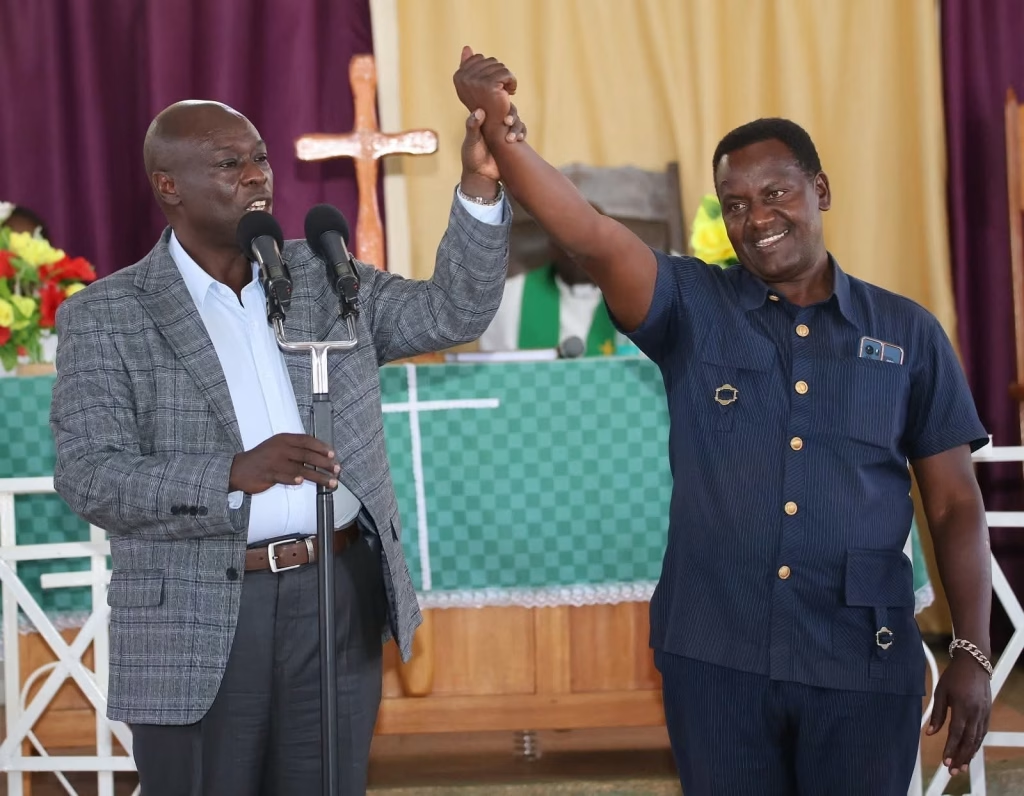
Some of his popular tracks include “Muthoni Kifagio” (1993), “Ngoma Bila Nguo,” “Avai Mwari,” and “Safari ya Meru.”
Beyond entertainment, Karish leveraged his fame and local roots to give back: he launched the initiative Guitar ya Karish, through which he mentors young, aspiring musicians — offering guidance, instruments, and a platform to record. In 2025, he celebrated 40 years in music with a large event in Embu featuring live performances, awards, and recognition for upcoming talent.
This dual role — artist and community patron — helped cultivate a grassroots network and emotional bond with many in Embu and surrounding counties. Many voters and supporters now see him as more than a musician: a cultural figure with real commitment to youth and local talent.
Transition to Politics: From MCA to MP Aspirant
Karish’s first major political breakthrough came in 2013, when he was elected as a Member of the County Assembly (MCA) for Muminji Ward in Embu County. He defended the seat successfully in 2017, becoming a three-term MCA.
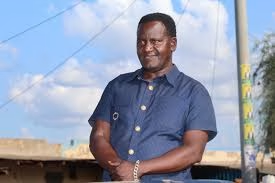
Over his tenure, he positioned himself as a grassroots leader: present at local events, markets, and churches, and involved in community development, especially through youth empowerment via arts and culture through “Guitar ya Karish.”
In June 2025, following the vacancy of the parliamentary seat in Mbeere North Constituency, Karish was officially nominated by the Democratic Party (DP) to run for the seat. DP’s leadership lauded Karish as a “servant-leader,” grounded in values, with a proven link to the community.
His candidacy has been described as deliberate: a blend of his cultural appeal, grassroots popularity, and previous public service — positioning him as a credible alternative to traditional politicians.
The 2025 Mbeere North By-Election: High Stakes for Mt. Kenya Politics
The 2025 by-election in Mbeere North is not just a local race; it is a pivotal moment that could reshape political power dynamics in central Kenya.
The contest is seen as a “kingpinship battle” between regional heavyweights, with Karish’s win or loss carrying larger significance beyond Mbeere North.
Supporters of Karish and DP have campaigned heavily on grassroots representation and rejecting vote-buying or inducements. A victory for Karish would signal that cultural icons with deep community ties can win contested seats, potentially inspiring similar entrants elsewhere in Mt. Kenya. Conversely, a defeat would underscore the strength of party machines and resource-heavy campaigns in shaping electoral outcomes.
Strengths, Challenges & What’s at Stake
Strengths & Advantages
- Name recognition & grassroots bond: His decades-long musical career makes him instantly identifiable to many voters, especially older and rural constituents.
- Track record of community service & youth empowerment: Through his MCA tenure and “Guitar ya Karish” initiative, he has demonstrated commitment to local development and nurturing young talent.
- Fresh alternative to traditional politicians: His background straddles culture and grassroots life — offering a different kind of leadership image that appeals to voters disillusioned with standard politics.
- High-profile backing and party support: With his party formally behind him and endorsements from national figures, his candidacy is taken seriously by both supporters and opponents.
Challenges & Uncertainties
- Contested political terrain: The by-election is fiercely competitive, with powerful interests and resources marshalled by opponents, including allegations of inducements and vote-buying.
- From local to national-level expectations: While his record as MCA and community leader is solid, performance as MP demands broader skills in legislation, constituency-wide development agendas, and governance responsibilities.
- Clan/party dynamics and political polarization: In Mt. Kenya politics, ethnicity, clan, and party alliances can outweigh popularity or performance, complicating even a well-rooted candidate’s chances.
- Need for a clearly defined development plan: Public messaging has emphasized representation, cultural identity, and “change” rather than a detailed manifesto around infrastructure, employment, health, or education.
What a Win (or Loss) Would Mean
If Karish wins:
- It could redefine electability in central Kenya — showing that grassroots popularity, cultural roots, and community service can overcome resource-heavy opponents.
- It may strengthen the influence of his supporters, shifting power in Mt. Kenya politics ahead of general elections.
- It might encourage more “outsider” or non-traditional candidates, broadening the pool beyond career politicians.
If Karish loses:
- It could reinforce the dominance of traditional party machinery, resources, and patronage in determining election outcomes.
- It might discourage similar cultural-celebrity candidates from running in the future.
- It could signal to constituents that popularity and cultural capital alone are insufficient — voters expect deliverable plans, visible development, and credible governance experience.
Final Thoughts — Why Newton Karish Matters
Newton Karish’s journey — from a village in Mbeere North to party rallies, from guitars and stages to county assembly benches — embodies a broader trend in Kenyan politics: the merging of culture, grassroots identity, and electoral ambition.
He represents hope for many: that someone familiar, rooted in the community, who has lived the struggles of ordinary people might bring a different kind of representation to Parliament.
Yet the stakes are high. This by-election is not just about Mbeere North — it is also a test case for how much weight cultural popularity and grassroots bonds carry in Kenya’s competitive, resource-driven electoral environment.
Karish’s bid offers lessons: about what qualities matter in leaders, whether “celebrity + service” can replace money and political patronage, and whether political change is more than slogans.
Follow us on X: https://x.com/Whispersnewsnow
