

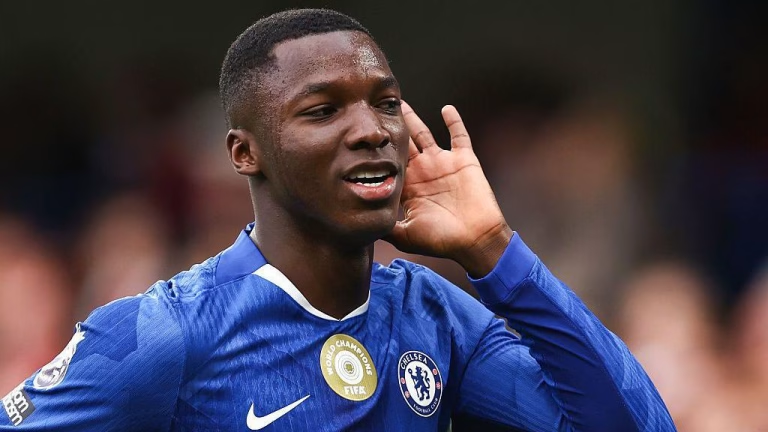
Moisés Caicedo is trending across football discussions, especially in Kenya and globally, after receiving a straight red card in Chelsea’s 1–1 draw with Arsenal at Stamford Bridge. The incident has revived long-standing concerns about VAR consistency, referee interpretation, and the impact of controversial decisions on high-profile Premier League matches.
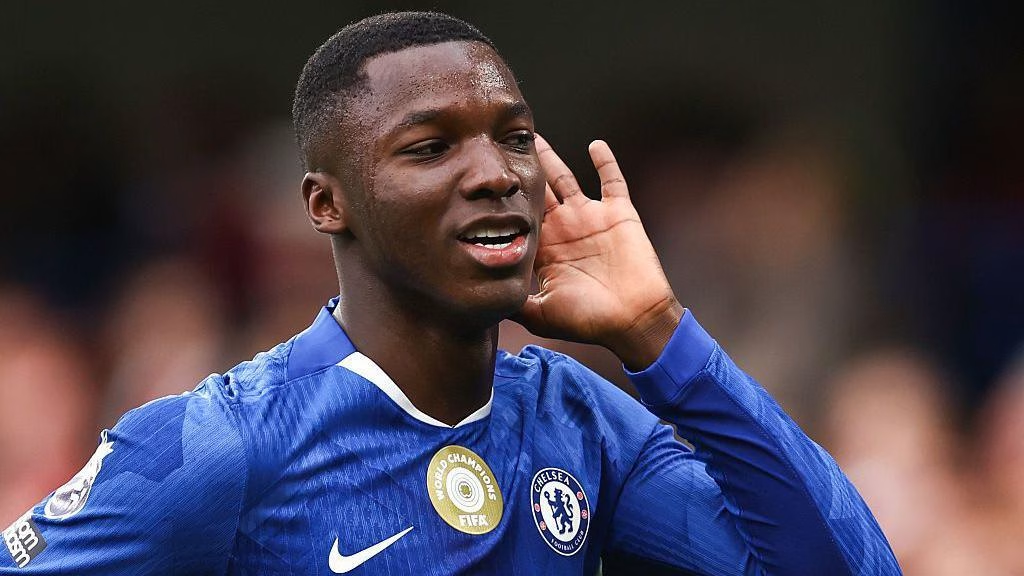
A High-Stakes Derby Turns Dramatic
The London derby was already a high-pressure fixture when referee Anthony Taylor issued Caicedo a straight red card in the 38th minute. Initially given as a yellow, the challenge on Arsenal’s Martín Merino was upgraded to a red after a VAR review—sparking immediate reaction from fans, pundits, and managers.
Chelsea, who had taken the lead earlier in the match, were visibly shaken by the numerical disadvantage. Despite this, they held their defensive structure, only for Arsenal to level late in the game through Merino—the same player involved in the red-card incident. The draw left both teams frustrated, but it was Caicedo’s dismissal that dominated headlines.
Was the Red Card Justified? The Debate Intensifies
The VAR footage showed Caicedo making a hard, late challenge, catching Merino high on the ankle. Critics argue that slow-motion replays make any tackle appear worse than it was in real time—a point emphasized by former England striker Gary Lineker, who said that slowed-down angles “exaggerate” the force and intent of a challenge.
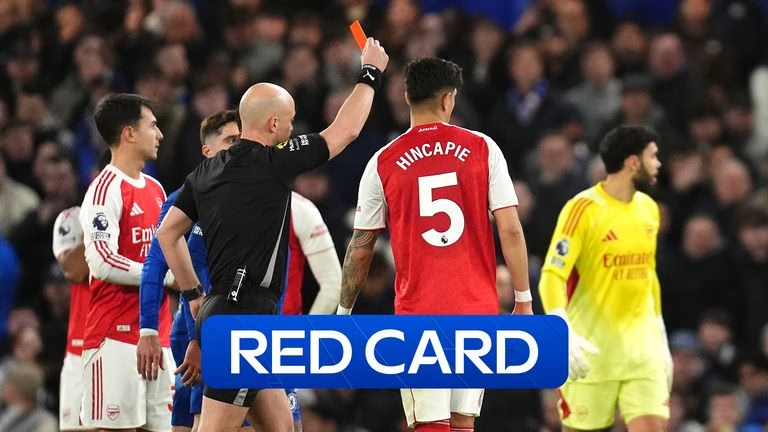
Manager Enzo Maresca accepted the referee’s final call but openly questioned the inconsistency, pointing out a similar challenge in Tottenham’s match where Rodrigo Bentancur escaped a red. His comments re-ignited the wider debate on what qualifies as “excessive force” and whether VAR standards are uniformly applied across the league.
For Chelsea supporters, the incident feels like another example of harsh luck in a season already full of referee-related frustrations.
Impact on Chelsea’s Season
Caicedo will now miss Chelsea’s next three Premier League games—a major blow to a squad that relies heavily on his ball-winning ability and midfield control. The suspension could influence Chelsea’s momentum as they chase consistency in a tightly contested league campaign.
Beyond squad selection challenges, the incident adds psychological pressure on the team, forcing Maresca to rotate his midfield options and rethink his tactical approach in upcoming fixtures.
Broader Refereeing Concerns: VAR Under Scrutiny Again
Once again, VAR finds itself at the centre of controversy. Fans and analysts are raising important questions:
- Are referees relying too heavily on slow-motion angles?
- Why do identical incidents result in different outcomes depending on the match or referee?
- Should intent matter more than the final point of contact?
These issues have piled pressure on the Premier League’s officiating bodies. It is pushing calls for clearer rules, improved communication, and more consistency.
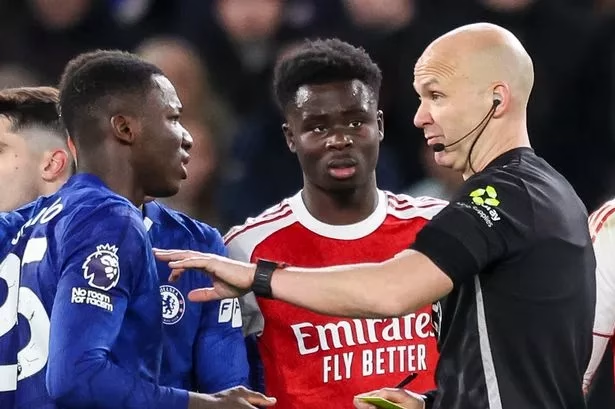
Why Caicedo Remains the Trending Topic
Across social platforms, the midfielder’s name is trending for three key reasons:
- The red card itself — seen by many as harsh, by others as fair.
- The immediate impact on Chelsea’s performance and upcoming fixtures.
- The broader debate on VAR reliability — a topic that consistently divides fans, especially when major derbies are affected.
As discussions continue, Caicedo’s red card has become more than just an isolated moment. It has turned into a symbol of deeper issues in Premier League officiating.
Related stories: https://www.whispers.co.ke/
Follow us on X: https://x.com/Whispersnewsnow
