

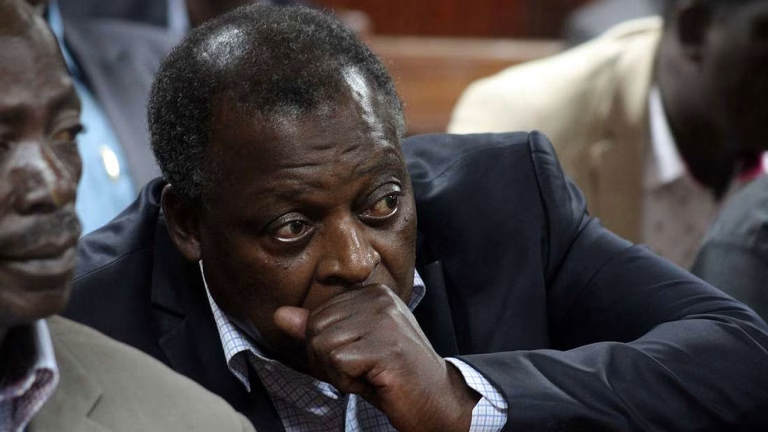
Introduction: The Myth and the Man
For decades, the name Cyrus Jirongo represented immense wealth, political influence, and flamboyant power. Many Kenyans viewed him as the embodiment of sudden riches in post–single-party Kenya — a man widely believed to have become a billionaire before the age of 40. By the late 2010s, however, the same name came to symbolize bankruptcy, unpaid debts, court battles, and claims of owing Kenya over KSh40 billion.

How did Jirongo build such an empire? And how did it collapse so dramatically?
This in-depth analysis examines his wealth, the foundations of his fortune, the controversial Postbank billions, court rulings that declared him bankrupt, and the ongoing debate over whether the once-feared power broker still holds hidden financial strength.
Early Rise: Youth Politics and the Birth of a Tycoon
Cyrus Jirongo rose to national prominence in the early 1990s as chairman of Youth for KANU (YK ’92), a political movement that mobilized support for the ruling party during Kenya’s shift to multiparty politics.
Money set Jirongo apart.
While many politicians struggled to fund rallies, YK ’92 organized lavish, well-financed events across the country. The movement distributed cash, handled logistics efficiently, and projected financial muscle. These displays convinced the public that Jirongo controlled enormous resources.
During this period, Kenyans began to associate him with extraordinary wealth. Popular culture even linked him to the KSh500 note, reinforcing his image as a man whose money seemed limitless.
The Foundations of the Empire
Jirongo built his wealth through political access, aggressive borrowing, land acquisition, and business ventures. Instead of relying on manufacturing or export-driven enterprises, he focused on asset-backed finance.
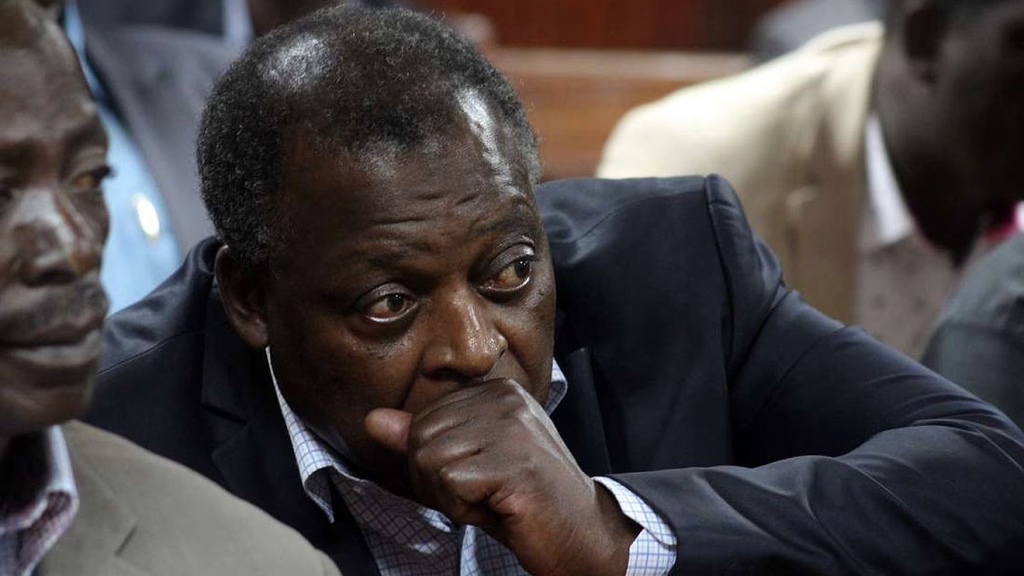
His empire reportedly rested on:
- Large tracts of land across several counties
- High-value urban properties
- Companies tied to agriculture and real estate
- Political influence that unlocked credit and guarantees
This strategy allowed rapid expansion. At the same time, it created dangerous exposure to debt. Once lenders demanded repayment, the empire faced serious strain.
The Postbank Question and the KSh40 Billion Shadow
The Postbank controversy remains the heaviest cloud over Jirongo’s legacy.
For years, investigative reporting and political debate have linked him to massive unpaid loans connected to the collapse of Postbank in the 1990s. Commentators frequently cite a figure of over KSh40 billion, a number that has come to define public perception of his financial troubles.
What the KSh40 billion figure represents
The amount does not stem from a single court judgment. Instead, journalists and analysts derive it from historical loans, accumulated interest, penalties, and recoveries linked to companies and land transactions from the Postbank era.
Key points include:
- Several loans went to corporate entities, not directly to Jirongo
- Land-backed borrowing inflated liabilities as interest accumulated over decades
- Weak recovery mechanisms allowed figures to grow unchecked
Jirongo has repeatedly rejected personal responsibility for the full amount. He argues that the media exaggerates the figures and that political interests drive the narrative. Despite these objections, the KSh40 billion claim continues to shape his public image.
Political Office Without Financial Rescue
In 2002, Jirongo entered Parliament after winning the Lugari constituency seat. Supporters expected parliamentary power to stabilize his businesses and shield him from creditors.
That rescue never came.
Instead, financial pressure intensified. His time in Parliament failed to restore his economic dominance, signaling that his financial decline had already begun long before he sought elective office.
Bankruptcy: The Collapse Becomes Official
Courts later declared Cyrus Jirongo bankrupt, delivering a stunning blow to his reputation.
The ruling confirmed what many creditors already suspected: he could not service his debts. Bankruptcy proceedings followed years of loan defaults, ballooning interest, and creditor petitions.
As a bankrupt individual, Jirongo lost control over parts of his financial dealings. Trustees and courts gained authority to supervise his assets and, where necessary, liquidate them. For the public, this moment marked the official collapse of the once-mighty Jirongo empire.
Arrests, Detentions, and the Weight of Debt
Jirongo’s troubles deepened when authorities arrested and detained him over unpaid civil debts, some amounting to tens of millions of shillings.
These incidents carried heavy symbolism:
- Creditors continued to pursue him aggressively
- His inability to clear relatively small debts undermined claims of hidden wealth
- His image shifted from power broker to embattled debtor
Although civil detention does not imply criminal guilt, the optics proved damaging. Few moments illustrated his fall more starkly.
Asset Auctions and Property Recoveries
Creditors and government agencies moved to auction Jirongo’s assets to recover unpaid loans.
They sold farms and parcels of land that once symbolized his vast wealth. These auctions demonstrated that his empire relied heavily on mortgaged property rather than liquid cash. Once lenders enforced their rights, the asset base shrank rapidly.
To critics, the auctions confirmed that his riches existed largely on paper. To supporters, they reflected the painful dismantling of an overleveraged portfolio.
Was Jirongo Ever Truly a Billionaire?
This question continues to divide opinion.
Arguments supporting the claim
- He controlled assets valued in the billions at their peak
- He financed political operations on a national scale
- He operated at a level consistent with extreme wealth
Arguments against it
- He relied heavily on borrowed funds
- Most assets carried heavy debt burdens
- Net worth collapsed when creditors demanded repayment
Jirongo likely represented a leveraged billionaire — powerful and wealthy during expansion, but dangerously exposed to financial shocks.
Broke or Misunderstood?
Two narratives now compete.
One portrays Jirongo as financially finished, pointing to bankruptcy rulings, asset seizures, and arrests. The other reflects his own defense, which blames exaggerated reporting, political hostility, and unresolved negotiations with creditors.
Reality sits between these extremes. Jirongo no longer commands the wealth he once did, yet the full accounting of his finances remains legally complex and historically entangled.
What the Jirongo Saga Reveals About Kenya
Beyond one man, the story exposes systemic weaknesses:
- Poor banking oversight in the 1990s
- Political influence over lending decisions
- Slow recovery of public funds
- Delayed accountability for economic wrongdoing
Jirongo’s rise and fall mirrors the failures of institutions that enabled reckless lending and postponed justice.
Conclusion: An Empire Turned Cautionary Tale
Cyrus Jirongo built his empire through politics, leverage, and access. Debt, court action, and shifting political winds later dismantled it.
Whether history remembers him as a billionaire who lost everything or a political financier crushed by a flawed system, his legacy now stands as a warning about unchecked power, debt-fueled wealth, and accountability in Kenya.
His story may still evolve, but its lessons already endure.
Follow us: https://www.facebook.com/WhispersNewsNow
