

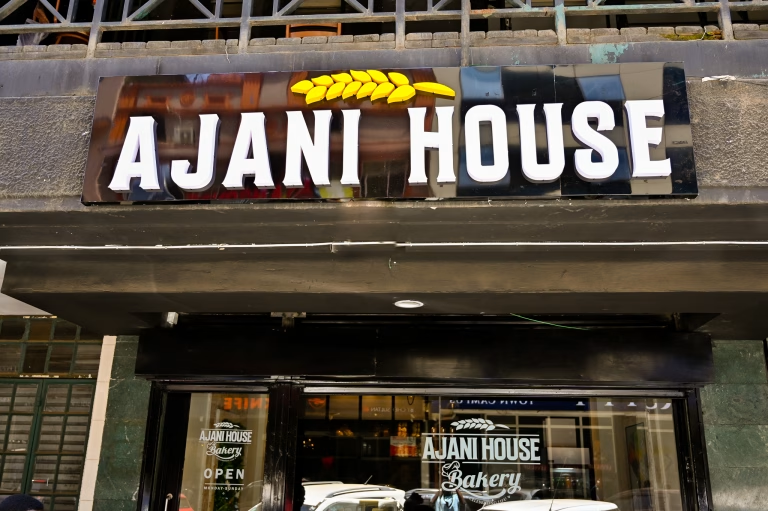
In Kenya’s vibrant and competitive bakery industry, Ajani House has steadily carved out a niche as a premium cake and pastry brand. Known for its creative custom cakes, café experience, and strong social media presence, the business has grown from a small home operation into a recognizable name in Nairobi.
But who exactly owns Ajani House? And what story lies behind its growth?
Ownership of Ajani House
Ajani House is owned and founded by Adelaide Njeri, a Kenyan entrepreneur who started the business as a passion project before transforming it into a thriving enterprise.
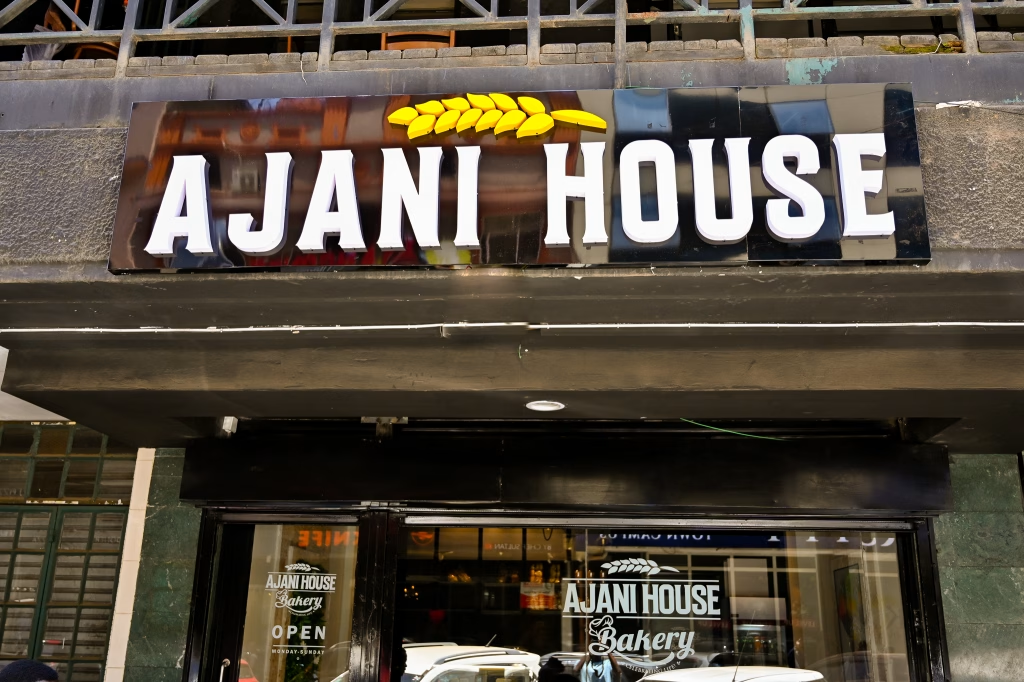
According to available business information, Adelaide Njeri began Ajani House in 2016 as a home baking hobby. What started as a creative outlet quickly gained traction due to the quality and uniqueness of her cakes. By 2017, she made the decision to run it as a full business, with a clear goal of creating employment and building a sustainable brand.
The business was later formally registered as a company in June 2021, marking a significant step toward structured growth and expansion.
From Hobby to Recognized Brand
Ajani House’s journey reflects a common but powerful entrepreneurial path in Kenya—starting small and scaling through consistency and customer trust.
Initially operating from home, the brand focused on:
- Custom cakes for birthdays, weddings, and events
- Personalized designs tailored to client stories
- High-quality ingredients and presentation
This approach helped Ajani House build a loyal customer base, particularly among middle- to high-end clients in Nairobi.
Expansion and Growth
The growth of Ajani House has been deliberate and strategic. Over the years, the company has expanded both physically and operationally:
- 2022: Opened a production space and cake outlet in Kasarani, Nairobi
- 2024: Expanded to include a café and additional locations, including Nairobi CBD
- Served over 25,000 customers and created employment opportunities for more than 35 people directly and indirectly
This growth signals a transition from a small bakery to a structured lifestyle and hospitality brand.
Business Model and Market Position
Ajani House operates in a competitive space but differentiates itself through:

1. Customization and Storytelling
The brand emphasizes that “every cake has a story,” offering personalized designs that resonate with customers’ events and emotions.
2. Premium Market Focus
Ajani House targets clients who value aesthetics, quality, and experience—positioning itself slightly above mass-market bakeries.
3. Customer-Centric Approach
Strong customer relationships and referrals have been central to its growth. Many clients return due to consistent service and quality.
4. Digital Influence
The brand has leveraged social media effectively, building a large following and attracting influencer and celebrity clientele.
Strategic Partnerships and Investment
Ajani House has also benefited from external support. Reports indicate that the business received investment from partners such as Intentum, which has helped accelerate its expansion plans.
This kind of backing is often crucial for scaling SMEs in Kenya, especially in sectors like food and hospitality where capital requirements increase with growth.
Locations and Presence in Nairobi
Ajani House operates in multiple locations across Nairobi, including:
- Kasarani (main production and outlet base)
- Nairobi CBD (retail and café expansion)
The brand has evolved beyond a bakery into a hybrid café and dessert destination, offering both takeaway and sit-in experiences.
Reputation and Customer Experience
Ajani House has built a strong reputation for:
- High-quality cakes and desserts
- Friendly and professional service
- Attention to detail in custom orders
Customer feedback consistently highlights the brand’s ability to deliver both visually appealing and great-tasting products, which is a critical combination in the bakery business.
Challenges and Opportunities
Like many growing Kenyan businesses, Ajani House faces both opportunities and challenges:
Opportunities
- Expanding into other cities across Kenya
- Scaling into a national bakery chain
- Developing packaged or retail-ready products
Challenges
- Maintaining quality while scaling
- Increasing competition from both boutique and established bakeries
- Managing operational complexity as the brand grows
The Vision Behind Ajani House
At its core, Ajani House is not just about cakes—it is about:
- Creating memorable experiences
- Building a strong team culture
- Contributing to employment and entrepreneurship
The founder’s vision continues to shape the company’s direction, especially as it moves toward becoming a leading bakery brand in Kenya.
Opinion: A Positive Critique
Ajani House stands out as a strong example of how passion-driven entrepreneurship can evolve into a scalable business in Kenya. Adelaide Njeri’s journey from home baking to running a multi-location brand reflects discipline, creativity, and a clear understanding of market demand.
What is particularly impressive is the brand’s commitment to quality and storytelling, which gives it an emotional edge over many competitors. However, as Ajani House continues to expand, the real test will be consistency. Maintaining the same level of personalization and product excellence across multiple outlets is not easy.
If the company invests in strong systems, staff training, and quality control, it has the potential to become one of Kenya’s most recognizable bakery brands. The foundation is already solid—the next phase is about scaling without losing its identity.
Conclusion
Ajani House is owned by Adelaide Njeri, a Kenyan entrepreneur who transformed a simple baking hobby into a growing business with multiple locations and a strong brand identity.
Its story reflects the broader narrative of Kenya’s SME ecosystem—where passion, resilience, and smart scaling strategies can turn small ideas into impactful enterprises.
Follow us: https://www.facebook.com/WhispersNewsNow
More stories: https://www.whispers.co.ke/
