

When you mention Kenyan hip hop, one name stands tall above the rest – Khaligraph Jones, famously known as Papa Jones or simply The OG. His deep voice, hard-hitting lyrics, and unapologetic presence have made him not just a rapper but a cultural force in Kenya and Africa at large. Khaligraph’s story is one of resilience, authenticity, and consistency. From the dusty streets of Kayole to the bright lights of international award stages, he embodies greatness and success.
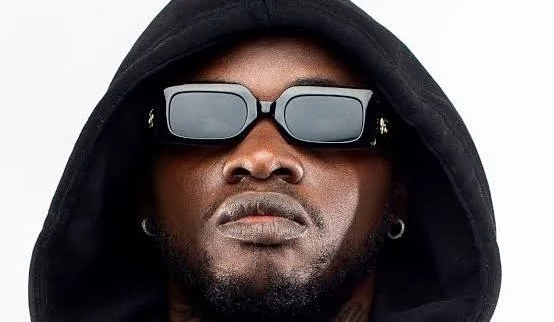
Humble Beginnings in Kayole
Born Brian Ouko Omollo in 1990, Khaligraph was raised in Kayole, a neighborhood in Nairobi known for its challenges. Life wasn’t easy – like many youth in the area, he faced poverty, lack of opportunities, and the constant pull of crime. But unlike many who gave in to these pressures, young Brian found solace in hip hop.
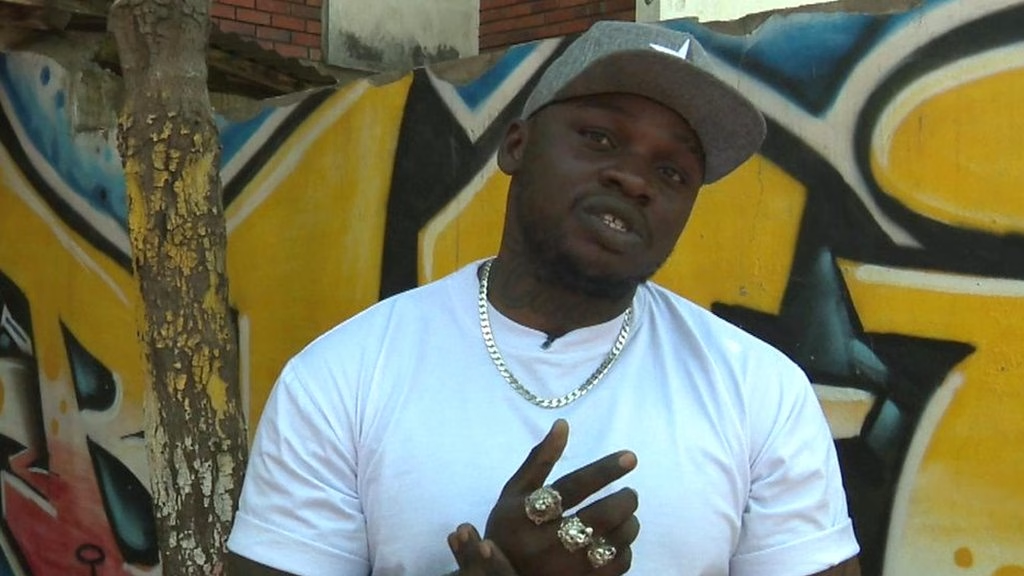
He started rapping as a teenager, inspired by American rap legends but determined to create a sound that reflected his environment. His raw freestyles in small Nairobi sessions made him a name in underground hip hop circles long before he hit mainstream recognition.
The Breakthrough: Channel O Emcee Africa (2009)
Khaligraph’s defining moment came in 2009 when, at only 19 years old, he competed in the Channel O Emcee Africa competition. Against all odds, he emerged as the winner. That victory not only gave him visibility but also proved that Kenya had a new rap powerhouse.
Still, the win didn’t translate into instant fame. He had to grind harder, recording mixtapes, battling rappers, and dropping singles until Kenyans began to take notice.
Building His Brand: The Rise of the OG
Khaligraph understood one truth early – in Kenya, hip hop needed consistency. While many rappers slowed down after a few hits, he kept working. Tracks like Mazishi, Yego, Omollo, and Wavy established him as a rapper with versatility – equally comfortable with hardcore bars, club bangers, and emotional storytelling.
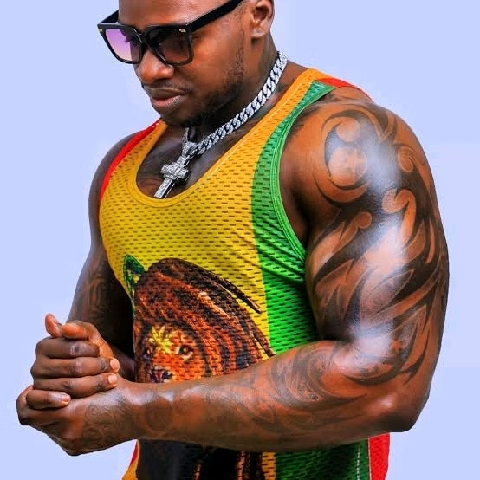
What set him apart was his delivery and presence. His commanding voice gave weight to his music, and his lyrics reflected the struggles, dreams, and realities of Kenyan youth. He wasn’t just rapping for himself – he was rapping for Kayole, for Nairobi, and for Kenya.
Redefining Kenyan Hip Hop
Before Khaligraph, Kenyan hip hop often played second fiddle to Nigerian Afrobeats or Tanzanian Bongo Flava. Many rappers struggled with acceptance because fans leaned toward danceable genres. But Khaligraph changed that.
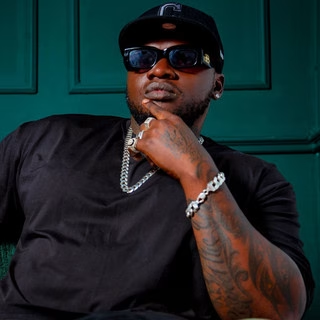
He proved that rap could be commercial, respected, and still authentic. His collaborations with artists like Sarkodie, Msupa S, and Rudeboy (P-Square) gave him continental reach. He also battled with Nigerian rapper Blaqbonez in a high-profile rap beef that only elevated his status in Africa.
Awards and International Recognition
Khaligraph’s greatness became official when he won the Soundcity MVP Award (2020) for Best Hip Hop Act in Africa. That recognition placed him above heavyweights like Nasty C and Sarkodie – a proud moment not just for him but for Kenya’s music industry.
Other milestones include:
- Multiple AFRIMMA nominations
- YouTube plaques for his massive streaming numbers
- Headlining international shows, including performances in Nigeria, South Africa, and the US
These achievements proved that Kenyan hip hop was not just local noise – it was continental music.
The Work Ethic of a Hustler
Greatness is not built on talent alone – and Khaligraph knows this well. His work ethic is legendary. Unlike many Kenyan artists who take long breaks between projects, Papa Jones is constantly dropping content. From singles to albums to collaborations, he rarely disappears from the scene.
His albums, especially Testimony 1990 and Invisible Currency (2022), show his evolution. Testimony 1990 gave fans deep storytelling about life in Kayole, struggles, and triumphs. Invisible Currency went even deeper, with themes of legacy, fame, money, and family.
This relentless hustle has made him one of the most consistent Kenyan musicians of the past decade.
Controversies and Battles
No story of greatness is without conflict. Khaligraph has had his fair share of controversies.
- Beefs with rappers: From Kenyan rappers who felt sidelined to international beefs with Blaqbonez, Khaligraph never shied away from lyrical battles.
- Accusations of American accent: Early in his career, critics mocked his “fake American accent.” Instead of backing down, he embraced it, later evolving into a unique style.
- Industry feuds: He has often called out Kenyan media and promoters for sidelining hip hop in favor of “softer” genres.
But instead of breaking him, these controversies only fueled his reputation as a bold and unapologetic rapper.
Khaligraph Beyond Music
Greatness isn’t just measured in hits. Khaligraph has also invested in his image as a family man and a role model. He often shares moments with his partner and children, balancing his tough rap persona with his softer side.
He also uses his platform to talk about mental health, politics, and social issues in Kenya. Songs like Khali Kartel are more than music – they are conversations about corruption, youth struggles, and hope.
Impact on Kenyan Culture
Khaligraph Jones has done more than build a career – he has built a movement.
- Inspiring young rappers – Many upcoming artists now believe that hip hop can be a viable career in Kenya.
- Giving Kayole pride – His success puts Kayole on the map in a positive light.
- Changing the music industry – He has shown that Kenyan artists don’t need to imitate foreign sounds to succeed.
For fans, Khaligraph represents the possibility of greatness – proof that no matter where you come from, success is achievable with talent and hard work. Check out his music https://open.spotify.com/artist/1xxXRVpuEm3X3p1QEm61Az
Conclusion: The OG Legacy
Khaligraph Jones is more than just a rapper. He is a symbol of Kenyan resilience, a pioneer who elevated local hip hop to continental recognition. His greatness lies not just in awards or fame but in his authenticity, consistency, and cultural impact.
From freestyle battles in Kayole to Soundcity award stages in Lagos, Khaligraph’s journey is the blueprint of success for every young Kenyan dreaming big.
For the culture, for Kenya, and for Africa – The OG is here to stay. More stories https://www.whispers.co.ke/558/politics/2025/rigathi-gachagua-the-rise-fall-and-political-reinvention-of-kenyas-most-controversial-leader/
