

Kenya’s politics is a stage where resilience, betrayal, and reinvention often determine survival. Few figures embody this truth more vividly than Geoffrey Rigathi Gachagua, the former Deputy President who went from the second most powerful man in the land to impeachment, and now re-emerges as a political comeback story.
His journey is not just about personal ambition—it is also about the shifting loyalties of Mt. Kenya, the weight of corruption allegations, and the delicate balance of power in Kenya’s democracy. https://www.youtube.com/watch?v=ONXs7hRzFxI
Early Life and Career Roots
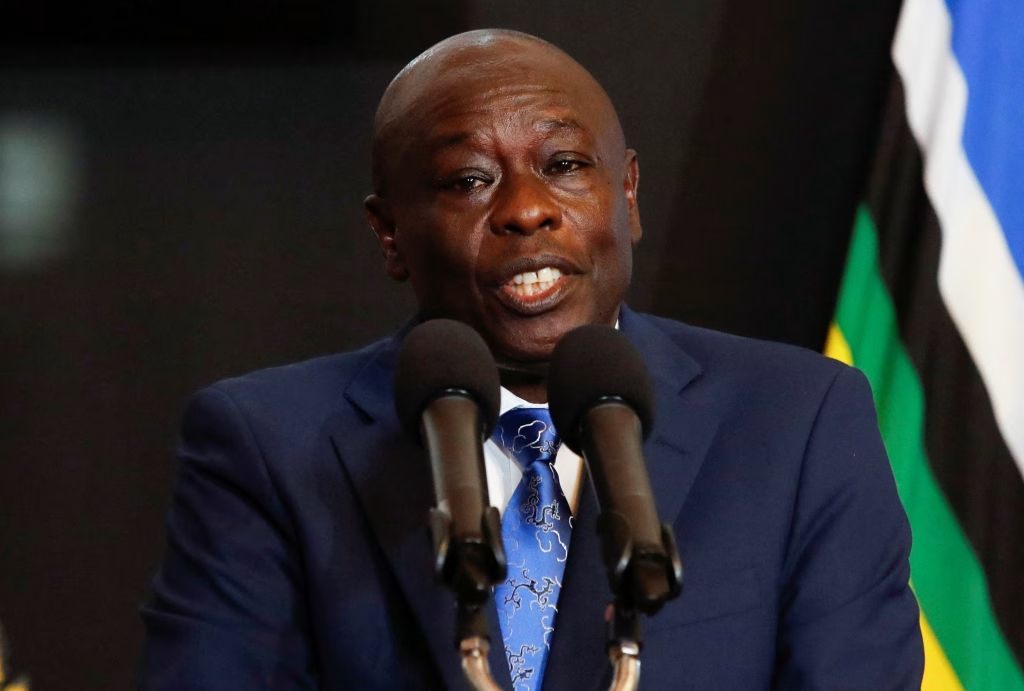
Born on 28 February 1965 in Hiriga village, Nyeri County, Gachagua grew up in a family shaped by Kenya’s liberation struggle. His parents were Mau Mau fighters, an identity he has often used to portray himself as a man connected to Kenya’s history of resistance.
He attended Kabiruini Primary School and later joined Kianyaga High School, before securing admission to the University of Nairobi, where he studied Political Science and Literature. At the university, he was an active student leader, chairing associations and sharpening the fiery public speaking style that would later define his political persona.
After graduating, Gachagua joined the public service. He served as a District Officer in different regions, and later as Personal Assistant to high-ranking officials, including Uhuru Kenyatta when he was Minister for Local Government. This background gave him a deep understanding of Kenya’s administrative machinery and political elite, connections that would prove invaluable.
Entry into Elective Politics
In 2017, Gachagua successfully vied for the Mathira parliamentary seat, stepping into the shoes of his late brother, Nderitu Gachagua, who had served as Nyeri Governor.
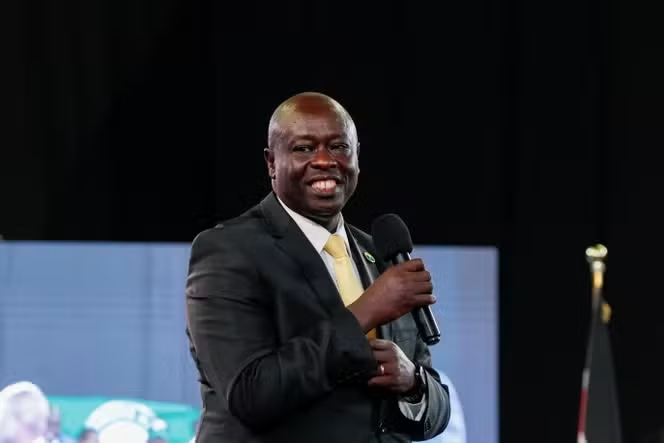
As MP, he carved a reputation for being vocal, abrasive, and unapologetically pro-Mt. Kenya. He pushed for legislation that favored local contractors and persistently criticized what he perceived as unfair treatment of his region in revenue allocation. Though his amendment bills rarely passed, his visibility grew.
The 2022 General Election: Kingmaker in Mt. Kenya
When William Ruto sought to challenge the “handshake team” of Uhuru Kenyatta and Raila Odinga in 2022, Gachagua became a key strategist. He understood Mt. Kenya’s anxieties—falling coffee and tea prices, unemployment, and resentment toward Uhuru Kenyatta’s political decisions.
By casting Ruto as the defender of the “hustler nation” and himself as the unapologetic Mt. Kenya enforcer, Gachagua delivered the bloc’s votes to Kenya Kwanza. Their victory, though narrow, made him Deputy President.
For the first time since independence, Mt. Kenya did not produce a president, but Gachagua positioned himself as the region’s chief spokesperson—a title that would later spark intense rivalry.
A Deputy President at War
Once in office, Gachagua proved both loyal and problematic. On the one hand, he defended Ruto against opposition attacks; on the other, he criticized state institutions and insisted on prioritizing Mt. Kenya’s interests.
His rhetoric of “one man, one vote, one shilling” became a rallying cry for equitable revenue distribution. To many Kikuyus, he was finally a leader willing to stand up for them after years of feeling politically exploited. But to leaders from other regions, it was divisive and ethnically charged.
Behind the scenes, tensions between him and Ruto deepened. Gachagua accused Ruto of sidelining Mt. Kenya in senior appointments and economic opportunities. The cracks widened until their partnership collapsed entirely in 2024.
Corruption Allegations and the Impeachment
Long before becoming Deputy President, Gachagua had been battling corruption allegations. In 2022, a court ruled that KSh 202 million in his accounts was proceeds of corruption. He was also accused in a multi-billion shilling graft case linked to inflated government contracts.
Although the cases were dropped or delayed, the public perception stuck: Gachagua was a man who thrived in shady deals. His critics called him the “face of impunity,” while his allies insisted he was a victim of political persecution.
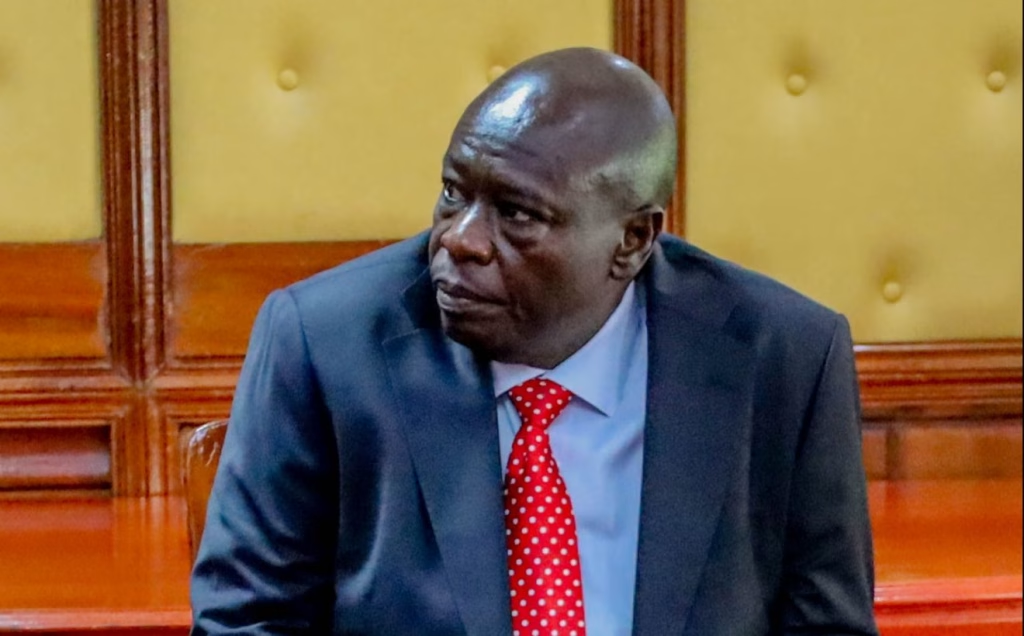
In October 2024, his troubles peaked. The National Assembly passed an impeachment motion against him on eleven charges, ranging from ethnic incitement to undermining the National Intelligence Service. The Senate upheld five counts, sealing his fate.
For the first time in Kenya’s history, a Deputy President was removed from office. Gachagua was humiliated, but not defeated.
The Mt. Kenya Political Battlefield
Mt. Kenya has always been central to Kenya’s power politics. From Jomo Kenyatta to Mwai Kibaki and Uhuru Kenyatta, the region has often produced presidents or key power brokers.
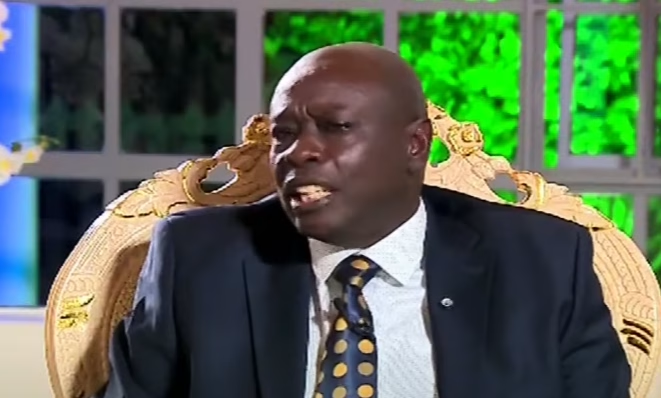
Gachagua has fought to inherit this mantle. His defense of coffee and tea farmers, his calls for better revenue sharing, and his relentless attacks on political opponents earned him both admiration and resistance.
Leaders like Martha Karua, Anne Waiguru, and Mwangi Kiunjuri have contested his self-proclaimed status as regional kingpin. Karua calls him tribal; Waiguru accuses him of arrogance; Kiunjuri says he is too confrontational. Yet despite the criticism, his raw ability to mobilize crowds keeps him at the center of Mt. Kenya politics.
Reinvention Through the Democracy for Citizens Party (DCP)
After months in political wilderness, Gachagua returned from a six-week U.S. tour in 2025 with a new mission: building the Democracy for Citizens Party (DCP).
His return was dramatic. Supporters clashed with police at Jomo Kenyatta International Airport, blocking roads and braving tear gas. To his critics, this was reckless incitement. To his supporters, it was proof that he remained their defender.
Through DCP, Gachagua now casts himself not as a tribal chief, but as a nationalist. He promises electoral justice, claiming that “no elections will ever be stolen again.” His message is carefully crafted to resonate beyond Mt. Kenya, appealing to young voters who feel betrayed by Kenya’s endless cycles of broken promises.
Public Image: Hero or Villain?
Gachagua’s image is deeply polarizing:
- Supporters see him as a truth-teller, fearless in defending Kikuyu interests, and a man punished for refusing to betray his people.
- Critics see him as a tribalist, opportunist, and corrupt politician whose populist rhetoric masks self-interest.
This dual image makes him both dangerous to opponents and difficult to ignore.
The Road to 2027: Kingmaker or Spoiler?
As Kenya inches closer to the 2027 elections, Rigathi Gachagua’s role is uncertain but significant. Several scenarios exist:
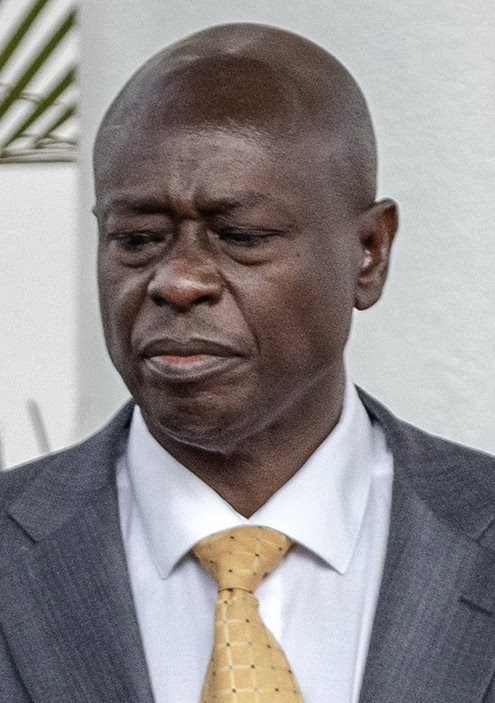
- Kingmaker Role: If he unites Mt. Kenya under DCP, he could determine whether Ruto, Raila, or another candidate wins.
- Presidential Ambition: Though less likely, he could mount his own presidential bid, positioning himself as the outsider champion of ordinary Kenyans.
- Spoiler Effect: If divisions within Mt. Kenya persist, his candidacy could fracture the vote, weakening the region’s bargaining power.
Whatever the outcome, it is clear that Gachagua is not done with politics. His resilience and populist tactics ensure that he will be a central figure in the next electoral cycle.
Conclusion
Rigathi Gachagua’s story is the perfect reflection of Kenya’s politics: messy, controversial, yet always unpredictable. From his humble beginnings in Nyeri, to Deputy President, to impeachment, and now political reinvention, he embodies survival in a system where today’s ally can be tomorrow’s enemy.
Whether Gachagua emerges as a national leader or remains confined to Mt. Kenya politics, one thing is certain—he will continue to shape debates, stir emotions, and disrupt Kenya’s political script. As 2027 approaches, his every move will be closely watched, for he represents both the hope and the danger of populist politics in Kenya. Read more https://www.whispers.co.ke/258/news/2025/why-museveni-is-visiting-kenya/
