

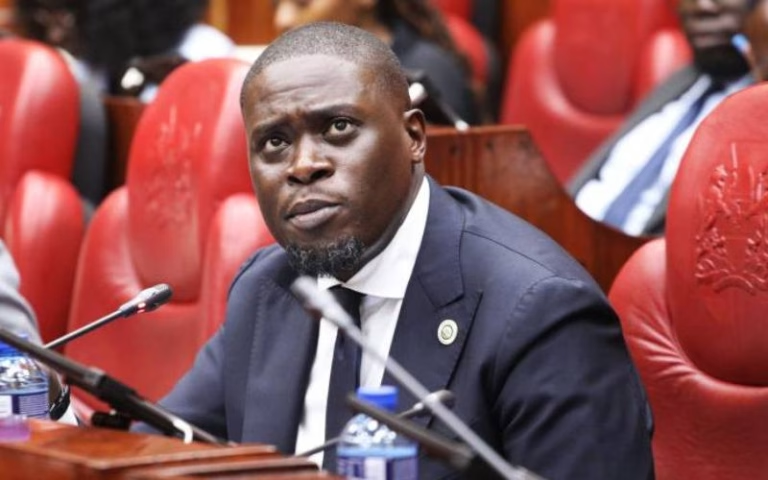
Nairobi Governor Johnson Sakaja walked a tight political rope in early September 2025, but in the end, he emerged from what could have been a career-ending impeachment bid. His survival was not accidental—it was a blend of political alliances, timely apologies, and the intervention of Kenya’s most powerful figures.
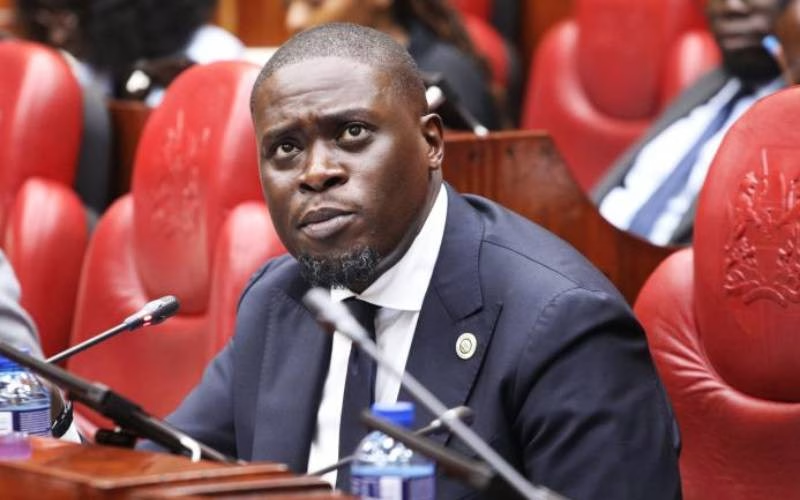
The Impeachment Storm
By September 1, 2025, over 70 Nairobi County Assembly MCAs had signed a motion to impeach Sakaja. With the Nairobi assembly having 123 members, this number was significant, although it still fell short of the 82 signatures required to formally table the motion.
The motion was anchored on five key accusations leveled against Sakaja:
- Gross violation of the Constitution – Allegations of ignoring public participation in major decisions and sidelining the assembly in county governance.
- Poor service delivery – MCAs cited deteriorating roads, stalled garbage collection, and failure to fix the city’s water shortage crisis.
- Financial mismanagement – Accusations that county funds were being misused, with inflated contracts and questionable procurement practices.
- Nepotism and favoritism – Claims that Sakaja had packed his administration with political loyalists and personal associates at the expense of merit.
- Broken relationship with MCAs – A perception that he had grown arrogant, dismissive, and unwilling to collaborate with the assembly.
With these charges hanging over him, the pressure was mounting, and Sakaja’s political future looked increasingly uncertain.
A High-Level Rescue Mission
Just when the storm seemed ready to sweep him away, two of Kenya’s most influential leaders stepped in:
- ODM leader Raila Odinga hosted a crucial meeting at the Jaramogi Oginga Odinga Foundation with ODM-affiliated MCAs and Sakaja himself. Read more here https://www.standardmedia.co.ke/politics/article/2001528416/sakaja-survives-impeachment-after-raila-intervention
- President William Ruto held a parallel session with UDA-allied MCAs at State House, Nairobi.
In both camps, the message was clear: Nairobi could not afford a political showdown that risked destabilizing the capital.
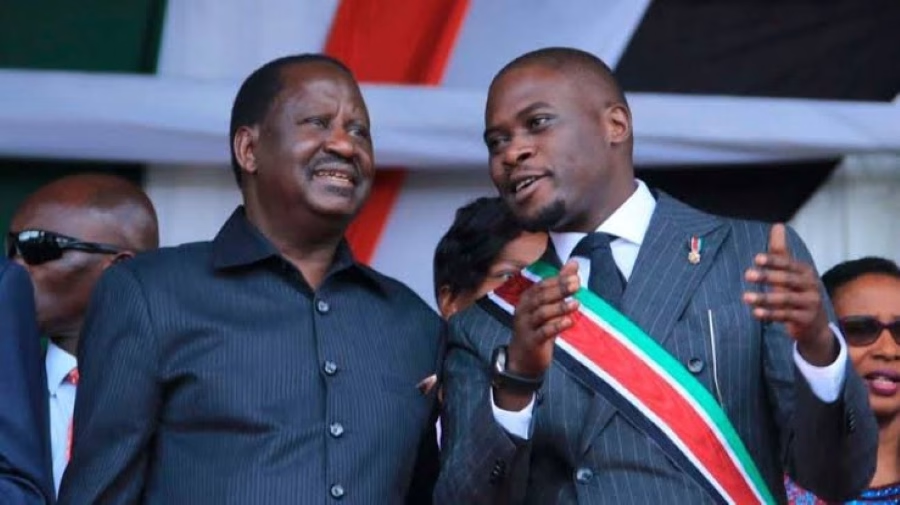
Suspension, Not Withdrawal
Following these interventions, MCAs reached a consensus—not to completely abandon the impeachment motion but to suspend it temporarily.
- At Raila’s meeting, Sakaja is reported to have apologized to the assembly members and promised to fix the highlighted issues within one month.
- At State House, President Ruto reinforced the call for calm, allegedly giving Sakaja 60 days to resolve the crisis points.
This compromise was framed not as coercion but as a collective decision aimed at governance stability.
Why Sakaja Survived
Several factors worked in Sakaja’s favor:

- Strong Party Alliances – He managed to draw support from both Raila and Ruto, bridging political divides at a critical moment.
- Apology and Commitment – His willingness to admit mistakes and commit to addressing MCAs’ concerns bought him precious time.
- Strategic Compromise – By suspending rather than withdrawing the motion, MCAs left room for accountability without immediate confrontation.
- ODM’s Nairobi Dominance – With ODM enjoying a strong majority in Nairobi, Raila’s backing effectively shielded Sakaja.
Reactions from MCAs and the Public
After the suspension of the motion, reactions poured in both from MCAs and ordinary Nairobians:
- George Aladwa (Makadara MP) told the press: “The governor has apologized and committed to correcting the issues raised. We are giving him one month to prove he means what he says.”
- UDA-allied MCAs echoed similar sentiments after their State House meeting, saying their decision was about “protecting Nairobians from chaos, not protecting Sakaja from accountability.”
On social media, Kenyans were divided:
- Some celebrated Sakaja’s survival, calling it an opportunity for him to refocus on service delivery.
- Others were skeptical, arguing that the suspension was only a political handshake between top leaders and not a genuine solution for Nairobi’s problems.
- A popular comment on X (formerly Twitter) read: “Nairobians don’t care who saved Sakaja. We care if garbage is collected, water flows, and roads are fixed.”
The mood online reflected both relief and frustration—relief that Nairobi was spared a bruising political battle, but frustration that governance issues remain unresolved.
The Bigger Picture
Sakaja’s survival underscores a deeper truth about Nairobi politics: leadership in the capital city is less about performance alone and more about navigating party dynamics and cultivating powerful allies. As Embakasi North MP James Gakuya noted, Sakaja’s future remains closely tied to Raila Odinga’s goodwill and ODM’s influence in the county.
For now, Sakaja has earned a reprieve, but the clock is ticking. MCAs have suspended—not killed—the impeachment motion. His next one to two months will be a critical test of whether he can transform political survival into effective leadership. More related news https://www.whispers.co.ke/571/health/2025/the-sha-scandal-how-billions-vanished-as-patients-die-without-treatment/
