

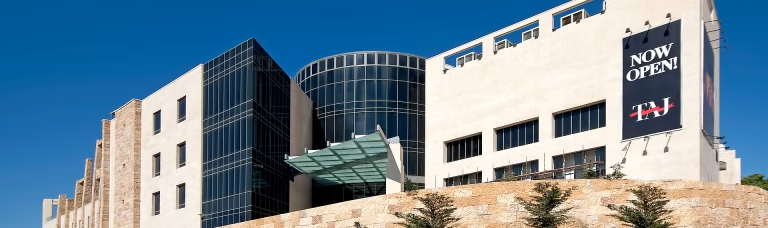
Taj Mall, once a prominent shopping complex along Nairobi’s busy Outer Ring Road, remains one of Kenya’s most talked-about malls—not just for its commercial ambitions, but also for the controversy that surrounded it. Though it no longer stands today, its story continues to spark curiosity among Kenyans, especially regarding its ownership, offerings, and legacy.
Who Owned Taj Mall?
Taj Mall was owned by Kenyan businessman Rameshchandra Govind Gorasia, who also served as the Managing Director of Taj Investments.
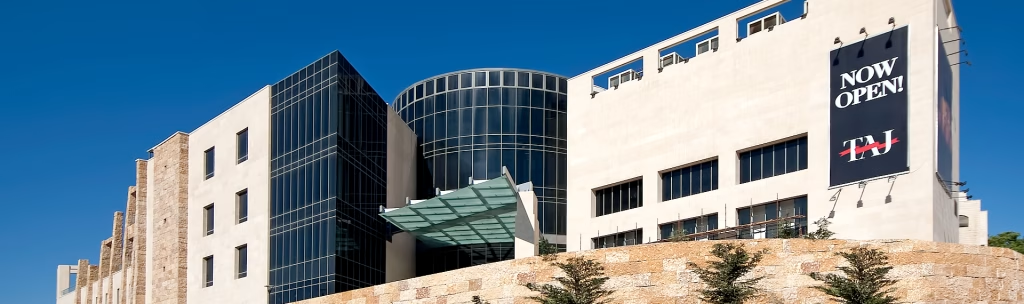
Gorasia consistently maintained that he was the sole legal owner of the mall and dismissed widespread speculation linking the property to political figures.
The mall, later rebranded as Airgate Centre, was a multi-billion-shilling investment that reflected his ambition to create a major retail hub in Nairobi’s Eastlands area.
What Was Offered at Taj Mall?
At its peak, Taj Mall was designed as a modern, multi-floor shopping complex with a wide range of amenities, including:
- Retail outlets: Clothing stores, electronics shops, and general retail spaces
- Supermarket anchor: At one point, a major tenant like Uchumi occupied significant space
- Office spaces: For businesses and service providers
- Dining options: Restaurants and fast-food outlets
- Parking and rooftop usage: Including leased rooftop space
- Entertainment and services: Banking, salons, and lifestyle services
The mall had multiple floors plus a rooftop section, making it one of the more ambitious commercial developments in the Embakasi area at the time.
Why Was Taj Mall Famous?
Taj Mall’s fame came from a mix of visibility, controversy, and scale:
1. Strategic Location
It was located at the junction of Outer Ring Road and North Airport Road—an area with heavy traffic and growing population, making it highly visible and accessible.
2. Legal and Land Disputes
The mall became nationally famous due to a prolonged legal battle over claims that it had been built on a road reserve and pipeline corridor.

3. Demolition Drama
In 2018, the Kenyan government demolished the mall after years of dispute, making headlines across the country.
4. Symbol of Urban Planning Challenges
Its rise and fall highlighted issues in Kenya’s real estate sector—particularly around land ownership, approvals, and urban planning enforcement.
The Rise and Fall of Taj Mall
Taj Mall officially opened in 2011 and quickly attracted tenants and customers. However, challenges began when authorities questioned the legality of the land it stood on.
Despite legal battles and resistance from the owner, the mall was ultimately demolished in September 2018 as part of a broader government crackdown on structures built on public land and infrastructure corridors.
This dramatic end cemented its place in Kenya’s urban history.
Positive Critique: A Vision Ahead of Its Time
While Taj Mall’s story ended controversially, it would be unfair to ignore its strengths and ambition.
First, the mall represented bold private investment in Nairobi’s Eastlands, an area often underserved by large-scale commercial developments. Gorasia’s vision aimed to decentralize high-end retail experiences from traditional hubs like Westlands and Karen.
Second, the mall’s design and scale showed that developers were beginning to recognize the economic potential of middle-income neighborhoods. This is a trend that continues today with newer malls emerging in similar locations.
Third, Taj Mall’s story has indirectly contributed to greater awareness and enforcement of urban planning laws in Kenya. Its downfall, though unfortunate, has helped shape a more structured approach to development approvals.
In a different regulatory environment—or with clearer coordination between authorities—the mall could have evolved into a thriving commercial landmark serving thousands of Nairobi residents.
Conclusion
Taj Mall, owned by Rameshchandra Govind Gorasia, remains one of Nairobi’s most memorable real estate developments. From its ambitious beginnings to its dramatic demolition, it tells a powerful story about investment, urban growth, and governance in Kenya.
Though it no longer stands, its legacy continues to influence how malls are planned, built, and regulated across the country.
Follow us: https://www.facebook.com/WhispersNewsNow
More stories: https://www.whispers.co.ke/
