

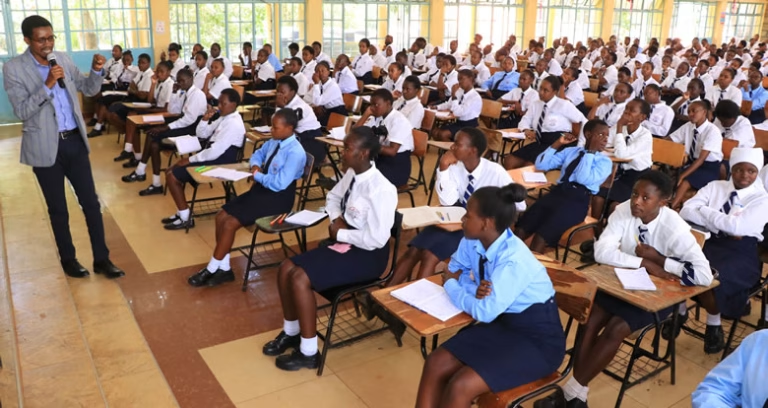
The release of the 2025 KCSE results has sparked conversations across Embu County as parents, teachers, and education stakeholders evaluate school performance trends heading into 2026. While several schools celebrated impressive grades, others struggled to meet the minimum academic benchmarks required for competitive university placement.
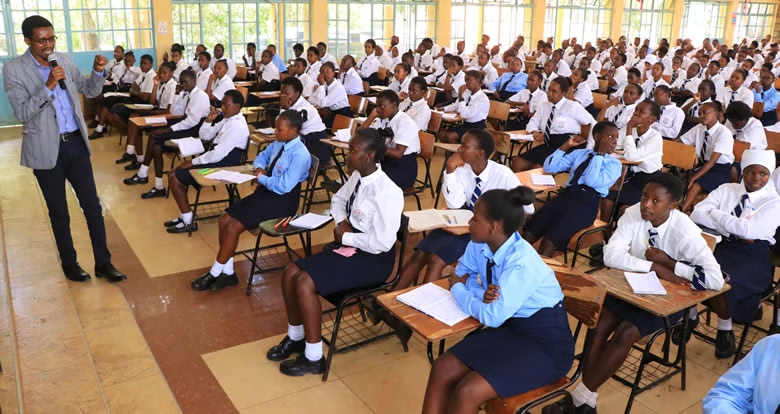
Although official rankings of the lowest-performing schools are rarely published in full, performance trends, mean score discussions, and local education reports highlight a number of institutions that continue to face academic challenges.
Below is an overview of schools and categories that have recorded consistently low mean scores in recent KCSE examinations.
1. Muragari Day Secondary School (Runyenjes)
Muragari Day Secondary School has faced recurring performance challenges over the years. The school has produced individual success stories, but its overall mean grade has remained below the county average. Limited resources and day-school structures have contributed to inconsistent academic outcomes.
2. Ena Day Secondary School
Ena Day Secondary School has shown pockets of improvement, yet overall KCSE performance trends indicate that the institution remains among those struggling to produce strong mean grades. Performance gaps in science and mathematics subjects have particularly affected its ranking.
3. Several Rural Day Secondary Schools in Mbeere Region
A number of smaller day schools across Mbeere North and Mbeere South constituencies have posted low mean grades compared to county leaders. These institutions often operate with limited infrastructure and face socio-economic challenges that directly affect student concentration and retention.
4. Mixed Sub-County Day Schools Across Embu
Some mixed day secondary schools in Embu West and Manyatta constituencies have consistently recorded mean grades below the national average. These schools often lack competitive academic culture and structured revision programmes.
Why Some Schools in Embu Underperform
Poor performance is rarely caused by one single issue. A combination of structural, social, and academic factors contributes to low KCSE results.
1. Inadequate Infrastructure
Many struggling schools lack fully equipped laboratories, libraries, and modern learning facilities. Without proper science labs, students find it difficult to grasp practical concepts examined in KCSE.
2. Shortage of Qualified Teachers
Some institutions operate with understaffed departments. In certain cases, one teacher handles multiple subjects, reducing efficiency and academic depth.
3. Socio-Economic Pressures
Students in rural areas often juggle school with domestic responsibilities. Financial challenges also lead to absenteeism, fee arrears, and emotional stress.
4. Weak Academic Culture
High-performing schools cultivate discipline, structured revision, and mentorship. Schools with poor results often lack a strong performance-driven culture.
5. Limited Career Guidance
Students without proper academic direction may lack motivation. Career mentorship plays a major role in improving exam outcomes.
How Embu Schools Can Improve Performance in 2026
Turning around poor academic performance requires deliberate effort. Below are practical strategies that can help struggling schools improve their KCSE results.
1. Strengthen Academic Monitoring
Schools should implement weekly subject progress tracking and continuous internal assessments. Regular performance reviews allow teachers to identify weak areas early. Monthly academic meetings can help departments adjust strategies before final exams.

2. Introduce Structured Revision Programs
Extra tuition sessions, especially for Form Four candidates, can significantly raise mean scores. Holiday revision camps and joint examinations with better-performing schools can expose learners to higher academic standards.
3. Invest in Teacher Motivation
Teacher morale directly influences student performance. Recognition programs, performance incentives, and professional development workshops can boost productivity in underperforming schools.
4. Improve Infrastructure Gradually
Boards of Management and local leaders should prioritize building science laboratories and expanding libraries. Even incremental improvements such as additional textbooks can make a measurable difference.
5. Strengthen Parental Involvement
Parents play a crucial role in student success. Schools should organize termly academic clinics where parents receive performance updates and guidance on supporting learners at home.
6. Promote Mentorship and Career Guidance
Inviting successful alumni and professionals from Embu County to mentor students can inspire academic ambition. Exposure to real-life success stories increases motivation and focus.
7. Encourage Discipline and Study Culture
High-performing schools emphasize structured study hours. Day schools can introduce supervised evening preps and morning revision sessions to improve consistency.
The Way Forward for Embu Education
Embu County has proven that academic excellence is possible. Top-performing schools in the region continue to demonstrate that strong leadership, discipline, and community support produce results.
Struggling schools are not beyond redemption. With targeted reforms, improved resource allocation, and consistent academic monitoring, many of these institutions can raise their mean scores significantly in the 2026 KCSE cycle.
Education remains the strongest equalizer in society. By addressing the root causes of poor performance, Embu can ensure that more students qualify for university admission and competitive career opportunities in the coming years.
More Stories: https://www.whispers.co.ke/
Follow us: https://www.instagram.com/whisperskenyanews/
