

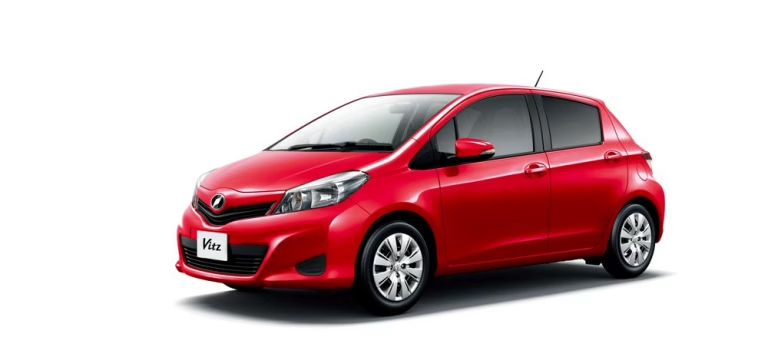
Take a walk along any Kenyan highway today and you will notice a clear pattern. From Nairobi to Embu, Mombasa to Eldoret, small Toyota models are everywhere.
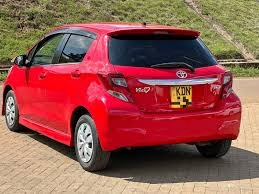
The dominance is no accident. It is a calculated shift driven by economics, lifestyle changes, and the realities of owning a car in Kenya.
While flashy SUVs still turn heads, compact Toyotas are quietly winning the numbers game.
The Economy Has Spoken
Fuel prices in Kenya have remained unpredictable for years. Every increase at the pump forces drivers to rethink their choices.
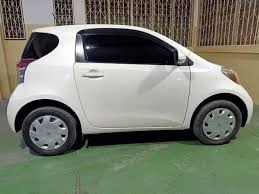
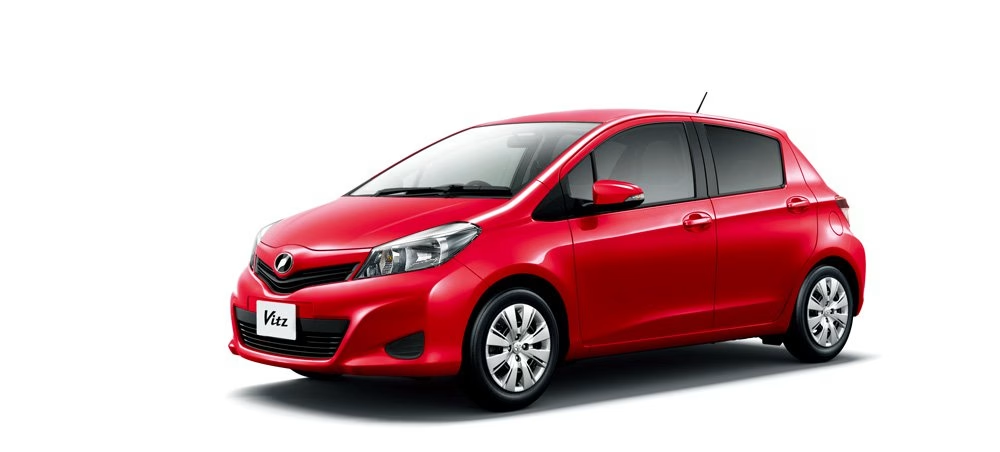
Small Toyota models such as the Toyota Vitz, Passo, Axio, and Aqua consume significantly less fuel compared to larger vehicles. Most of these cars average between 18 to 30 kilometers per litre depending on the model and engine capacity.
For a country where many people commute daily from satellite towns like Ruiru, Kitengela, Juja, and Ngong into Nairobi, fuel efficiency is not a luxury. It is survival.
Owning a fuel-friendly car means saving thousands of shillings every month. That alone makes small Toyotas irresistible.
Affordability Wins Every Time
Kenyans are practical buyers.
A brand-new large SUV can cost anywhere above KSh 4 million. In contrast, a used Toyota Vitz or Passo imported from Japan can range between KSh 700,000 and KSh 1.2 million depending on the year and condition.
That price gap changes everything.
With SACCO loans, bank financing, and asset-based lending becoming more accessible, many first-time car owners are choosing compact Toyota models as their entry into vehicle ownership.
It feels achievable. It feels realistic.
Spare Parts Are Everywhere
One major reason Toyota continues to dominate Kenya is simple: spare parts availability.
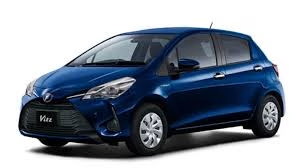
In Nairobi’s Kirinyaga Road, Industrial Area, or even in smaller towns like Embu and Meru, Toyota parts are easy to find. Mechanics understand Toyota engines inside out.
If you own a less common brand, you might wait weeks for imported parts. With Toyota, chances are high that the component you need is already on the shelf.
That reliability builds confidence.
Kenyans prefer peace of mind over experimentation.
Reliability That Has Been Tested
Toyota has built a reputation in Kenya for durability.
From matatus running 24 hours to government fleets operating in remote counties, Toyota vehicles have proven they can handle rough terrain and inconsistent road conditions.
Small Toyota cars may look modest, but their engines are built with the same reliability philosophy.
Buyers trust what they have seen work for decades.
That trust is powerful.
Ride-Hailing and Side Hustle Culture
The rise of Uber, Bolt, Little, and other ride-hailing platforms has transformed the car market.
Many young professionals now purchase small Toyota models specifically for ride-hailing business.
Cars like the Axio and Toyota Fielder are popular because they offer comfort, low fuel consumption, and affordable maintenance.
A small Toyota can generate daily income.
It is no longer just transport. It is an investment tool.
In a country where side hustles matter, that matters.
Perfect for Urban Living
Kenyan cities are growing fast, but infrastructure struggles to keep up.
Parking in Nairobi CBD is limited and expensive. Estate roads can be narrow. Traffic congestion is part of daily life.
Compact Toyota models fit easily into tight spaces. They maneuver through traffic smoothly.
Driving a small car in town feels practical rather than stressful.
Urban life favors efficiency over size.
Import Market Advantage
Japan’s used car export market heavily features Toyota models.
This makes sourcing small cars easier compared to many European brands.
Importers prefer The brand because the resale value remains strong. Buyers also feel confident purchasing a Toyota with 80,000 to 120,000 kilometers because the brand’s engines are known to last well beyond that range with proper maintenance.
The second-hand market reinforces Toyota’s dominance.
Social Influence and Perception
There is also a subtle social factor at play.
When neighbors, colleagues, and relatives buy small Toyota models and have positive experiences, others follow.
Word-of-mouth remains a powerful marketing tool in Kenya.
You rarely hear someone complain about a Toyota draining their savings through constant repairs.
The brand has become a safe choice.
Safe often wins.
Lower Insurance and Maintenance Costs
Insurance premiums for smaller vehicles are generally lower than for large SUVs.
Maintenance costs are also manageable because the engines are simple and mechanics are familiar with them.
For middle-income earners balancing rent, school fees, and daily expenses, predictability in car ownership costs is a major advantage.
A small Toyota reduces financial stress.
Environmental Awareness Is Growing
Hybrid Toyota models such as the Toyota Aqua are gaining popularity in Kenya.
These cars offer impressive fuel economy and lower emissions.
As conversations about environmental sustainability grow, more buyers are considering fuel-efficient and hybrid options.
The brand is well-positioned in that space.
Resale Value Is Strong
One of the smartest financial decisions Kenyan car buyers consider is resale value.
Toyota vehicles retain value better than many competitors.
If someone buys a Vitz today, they can resell it after three years without losing a massive percentage of the purchase price.
That makes buying feel less risky.
In uncertain economic times, low risk matters.
Why the Shift Feels Sudden
The love for small Toyotas may seem sudden, but the signs have been building.
Economic pressure, urban congestion, digital side hustles, and fuel costs have gradually shaped buyer behavior.
The shift is not emotional. It is strategic.
Kenyans are choosing vehicles that align with their daily realities.
Is Toyota Facing Any Competition?
Brands like Mazda, Nissan, and Honda are also present in Kenya’s small car segment.
However, Toyota’s ecosystem remains unmatched.
From spare parts distribution to mechanic familiarity and resale strength, the brand has built layers of dominance over decades.
Competition exists, but Toyota holds the advantage.
Final Thoughts: Practicality Is Winning
Toyota is not winning because it is flashy. It is winning because it understands the Kenyan market.
Small Toyota cars meet the needs of first-time buyers, urban commuters, ride-hailing drivers, and cost-conscious families.
They are affordable and fuel-efficient. They are easy to maintain.
In today’s Kenya, practicality beats prestige.
And right now, practicality wears a Toyota badge.
More Stories:https://www.whispers.co.ke/
Follow us: https://www.instagram.com/whisperskenyanews/
