


Kenyans are known for many things: resilience, humor, hustle, and unmatched hospitality. Step into any estate, matatu, village market, or office corridor and you will witness small acts of kindness that instantly reveal someone’s roots. These behaviors may seem ordinary to us, but to outsiders they are extraordinary.
Here is a list of friendly behaviors that loudly and proudly say, “I am Kenyan.”
1. Greeting Everyone — Even Strangers
In Kenya, walking past someone without greeting them can feel almost criminal. Whether it’s “Sasa,” “Habari,” “Mambo,” or a respectful “Shikamoo,” greetings are sacred.
A Kenyan will greet:
- The watchman at the gate
- The mama mboga at the corner
- The conductor in a matatu
- Even someone they have never met before
It is not about formality. It is about acknowledging humanity.
2. Offering Food Automatically
If you are eating and someone walks in, you will hear it immediately:
“Karibu ukule.”
It doesn’t matter if the food is little. It doesn’t matter if it is just tea and mandazi. A Kenyan feels uncomfortable eating in front of someone without inviting them to share.
Even when the offer is symbolic, the generosity is genuine.
3. Escorting a Guest to the Gate
You cannot just say goodbye from the sofa. That would feel incomplete.
A true Kenyan host walks you to the gate. Some will even stand there watching until you turn the corner. Others will wave until your car disappears from sight.
Hospitality here is not rushed.
4. Helping You Carry Your Luggage — Even If It’s Not Heavy
Visit a Kenyan home and try lifting your own suitcase. You will hear protests immediately.
“Wacha nikusaidie.”
“Let me help you.”
Even if the bag weighs only 2 kilograms, someone will insist on carrying it.
Helping is instinctive.
5. Sharing Directions in Detail
Ask for directions in Kenya and you won’t receive a simple answer.
Instead of “It’s two streets away,” you will hear:
“Go straight until you see a blue kiosk. Turn left at the big mango tree. After that there is a boda stage, ask again there.”
Kenyans do not just point. They guide with commitment.
6. Checking on You After One Small Problem
Mention that you had a headache yesterday and prepare for follow-ups.
“Are you feeling better?”
“Did you go to hospital?”
“Did you take dawa?”
Concern here is continuous. Once you share a problem, it becomes communal.
7. Calling You “Boss,” “Madam,” or “My Friend”
Respect flows through everyday language.
In shops, salons, markets, or offices, you will hear:
- “Boss, what can I get you?”
- “Madam, karibu.”
- “Sister, let me show you.”
Titles are used generously. They create warmth instantly.
8. Standing Up to Greet an Elder
Respect for elders remains deeply rooted in Kenyan culture.
When an older person enters the room, many Kenyans will:
- Stand up
- Offer a seat
- Lower their tone
Courtesy here is not optional. It is cultural training.
9. Contributing Without Being Asked
In Kenya, if there is a funeral, wedding, hospital bill, or fundraiser, people contribute.
Harambee is not just a word. It is a lifestyle.
Even someone with little money will send something small via M-Pesa. The amount does not matter as much as participation.
10. Offering Tea Immediately
Visitors do not sit for long before tea appears.
You may hear:
“Chai itakua aje?”
“Milk or black?”
Tea is not just a drink. It is a welcome ceremony.
11. Laughing Loudly in Groups
Kenyan gatherings are rarely quiet.

Whether in a matatu, family function, or office break room, laughter fills the air. Stories are animated. Jokes travel fast. Banter is endless.
Community joy is shared joy.
12. Helping a Stranger Push a Car
When a vehicle stalls on the road, something beautiful happens.
People appear from nowhere.
Men in suits. Women in market aprons. Youth from nearby shops.
They push together without negotiation. Afterward, everyone disperses like nothing happened.
13. Using “Pole” Generously
In Kenya, sympathy is immediate.
Lose a phone? Pole.
Miss a bus? Pole.
Stub your toe? Pole.
The word carries empathy in its simplest form.
14. Sending You Off with Blessings
When leaving someone’s home, especially in rural areas, you may hear:
“Safiri salama.”
“Fika salama.”
“God bless you.”
Travel blessings are automatic. They reflect care beyond the moment.
15. Giving You Extra — Just Because
At the market, a mama mboga might add coriander or a few extra tomatoes.
“Ongeza kidogo,” she says with a smile.
That small addition feels like a gift.
16. Inviting You to Sit — Even in Tight Spaces
Visit a small kiosk or crowded house and someone will shift to create space.
“Kaa tu hapa.”
No one should stand if a seat can be squeezed out.
17. Checking Your Marital Status Within Minutes
It may sound intrusive elsewhere, but in Kenya it is often curiosity mixed with concern.
“Umeolewa?”
“Do you have children?”
These questions are social icebreakers. They signal interest in your life story.
18. Offering Shelter During Rain
If rain pours suddenly, someone under shelter will wave you in.
“Kuja hapa usinyeshewe.”
Protection is instinctive.
19. Walking You Part of the Way
Sometimes a Kenyan won’t just give directions. They will walk with you halfway.
They sacrifice their own time to ensure you are safe and confident.
20. Saying “Karibu Tena”
You will rarely leave without hearing this.
It means “You are welcome again.”
Also, it is not a polite cliché. It is a sincere invitation.
Why These Behaviours Matter
These small actions reflect something deeper than politeness. They reveal a culture built on connection.
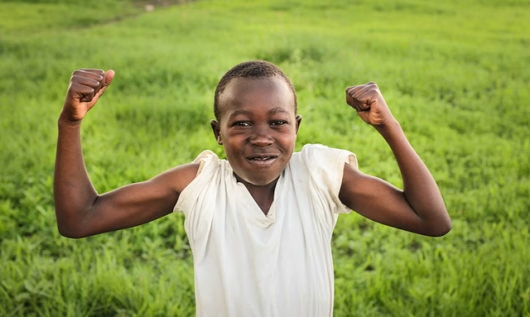
Kenya has over 40 ethnic communities, yet hospitality cuts across them all. Whether in Nairobi’s fast-paced estates or in quiet villages in Embu, Kisumu, or Mombasa, friendliness remains a shared identity.
In a world that often feels rushed and individualistic, Kenyan warmth stands out.
It is in the greeting, in the tea, and in the extra sukuma wiki.
These behaviours may seem simple, yet they define us loudly.
And when someone asks what makes Kenyans unique, the answer is clear.
We care loudly, welcome openly, and show up for each other.
That is the Kenyan way.
More Stories:https://www.whispers.co.ke/
Follow us: https://www.instagram.com/whisperskenyanews/
