

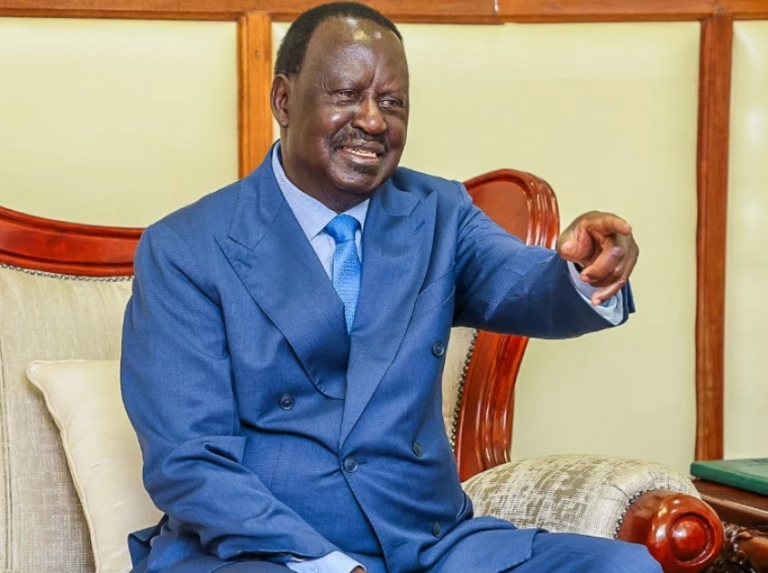
The Roots of Defiance
The Raila Odinga political journey began with defiance. In the 1980s, when Daniel arap Moi’s rule suppressed dissent, Raila joined underground movements demanding multiparty democracy. His role in the reform struggle made him a target of state persecution and politics.
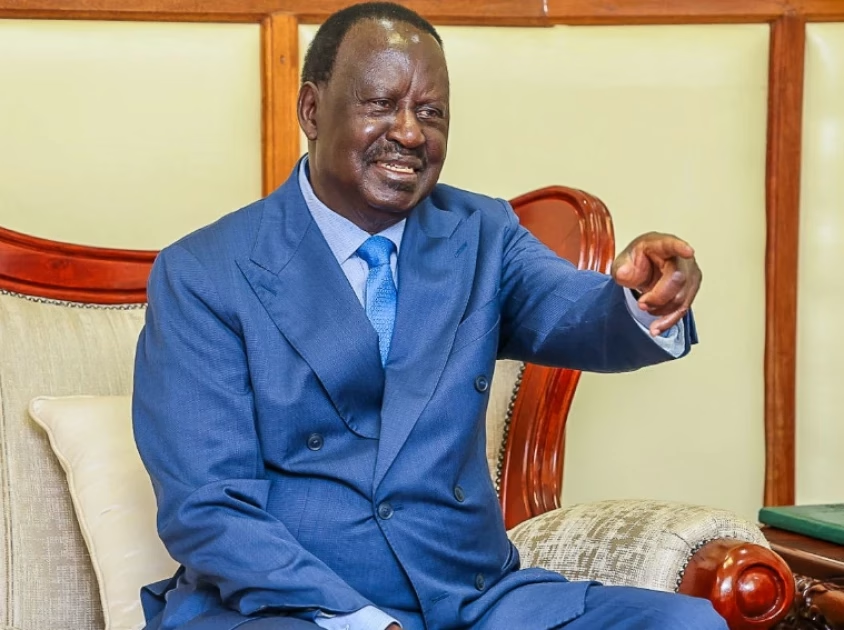
Detained without trial for nearly nine years, Raila became a political prisoner whose spirit refused to be broken. His courage during imprisonment marked the birth of his enduring political defiance — the belief that no system was too strong to challenge.
Exile and Continued Resistance
After several detentions, Raila was forced into exile in Norway. Even from abroad, he remained vocal about Kenya’s need for democratic reform. His political struggles gained international recognition as he built alliances with global human rights organizations. See here https://www.whispers.co.ke/939/celebrities/2025/10-unpopular-truths-about-raila-odinga-you-probably-dont-know/
His return to Kenya in 1990 re-energized the democracy movement. The call for multiparty politics grew stronger, and soon Moi’s one-party system collapsed under pressure.
Master of Political Realignment
When multiparty politics returned, Raila proved to be both a reformist and a strategist. He moved through Ford-Kenya, NDP, and later ODM, learning to balance ideology with political survival.
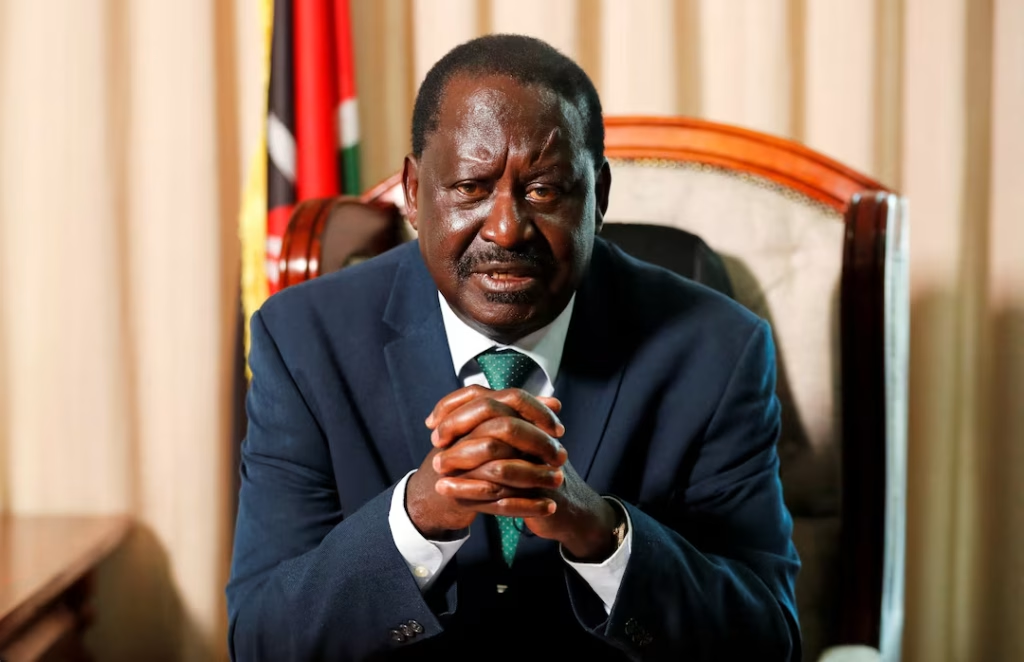
His famous “Kibaki Tosha” declaration in 2002 reshaped Kenyan politics. That bold endorsement united opposition forces under the NARC coalition and ended decades of KANU dominance. It was a masterclass in political timing and defiance.
The 2005 Referendum and the Rise of ODM
In 2005, Raila Odinga led the “NO” campaign during the constitutional referendum, using the orange symbol that would later become ODM’s identity. The success of that campaign solidified his reputation as the people’s champion — a Kenyan opposition leader who could mobilize nationwide movements.
ODM became a vessel for his reform agenda — devolution, inclusivity, and justice. It was more than a party; it was a vision for Kenya’s democracy.
The 2007 Election and the Cost of Courage
The Raila Odinga political journey reached its most dramatic point in 2007. His popular support clashed with state machinery in an election marred by irregularities. The disputed results triggered post-election violence that shook the nation.
Raila’s decision to embrace dialogue led to the power-sharing deal and his appointment as Prime Minister. Despite criticism, he prioritized peace and constitutional change, culminating in the 2010 Constitution — one of Kenya’s greatest democratic milestones.
Opposition Politics: 2013–2022
In subsequent elections, Raila’s political defiance never waned. He rejected flawed elections in 2013 and 2017, exposing weaknesses in Kenya’s electoral system. His persistence forced institutions to evolve — even leading to a historic Supreme Court annulment in 2017.
His 2018 Handshake with President Uhuru Kenyatta showed a different side of defiance — one rooted in reconciliation. Through the Building Bridges Initiative (BBI), Raila sought to reshape the political system to reduce ethnic rivalry and divisive winner-takes-all politics.
Although his 2022 Azimio la Umoja bid fell short, his influence remained immense. Every campaign, every protest, and every speech reminded Kenyans that the fight for democracy never ends.
Enduring Struggles and Lasting Legacy
Raila Odinga’s political struggles — from imprisonment to exile, from betrayal to rigged elections — define him as Kenya’s ultimate survivor.
He has been jailed, exiled, and vilified, yet his voice has remained constant: a demand for justice, integrity, and inclusion. His courage inspired generations to challenge oppression, to believe that even without victory, defiance itself can move a nation forward.
Conclusion: The Power of Defiance
The Raila Odinga political journey is the story of how one man turned resistance into reform. He fought for multiparty democracy when it was forbidden. He challenged flawed elections when others feared retribution. And even when power slipped away, he continued to lead — not from the palace, but from the people’s hearts.
In Kenya’s history, Raila Odinga stands as proof that political defeat does not erase legacy. His unbroken spirit will forever define the meaning of opposition, resilience, and reform.
Follow us on FB https://www.facebook.com/Bluediva
