


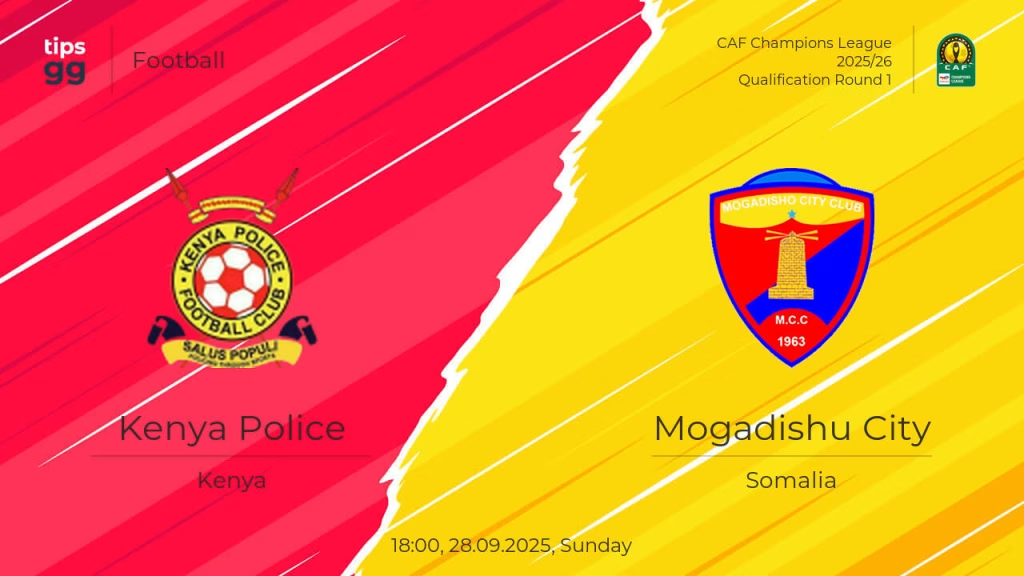
A recent football match between Kenya Police FC and Mogadishu City Club (MCC) has escalated beyond scores and penalties. What began as a spirited CAF Champions League preliminary match turned into a national uproar when supporters—reportedly of Mogadishu City Club—were caught stepping on, kicking, and desecrating the Kenyan flag. Though MCC has since issued an apology, the Interior Ministry and other Kenyan authorities have made it clear: this apology, while necessary, is far from sufficient. Here’s a breakdown of why.

What Happened
- During the first leg on September 20, 2025, at Nyayo National Stadium in Nairobi, videos circulated showing MCC fans engaging in disrespectful acts toward the Kenyan flag.
- Among the actions documented: stepping on the flag, kicking it, snatching it from supporters, placing it on objects and treating it in ways many saw as humiliating.
- The flag is protected under Kenya’s National Flag, Emblems, and Names Act (Cap. 99). Disrespecting it carries legal penalties—including fines, jail time, or both.
Mogadishu City Club’s Apology
- MCC condemned the behavior, saying it does not represent their values and sportmanship. The club apologized to the Kenyan government and people, and offered cooperation for investigations.
- The apology emphasized that such conduct “has no place in football or in the spirit of friendship and sportsmanship.”
Why the Interior Ministry Says the Apology Isn’t Enough
1. Sovereignty and National Symbols Aren’t Negotiable
The Kenyan government views the national flag not merely as decoration, but as a symbol of sovereignty, national unity, pride, and history. When someone publicly desecrates it—especially foreigners or visiting fans—it is seen not just as an insult, but as an attack on the national dignity. The government believes that symbols like the flag deserve more than regret; they deserve respect enforced through law.
2. Legal Obligation under Existing Laws
Kenya already has laws in place—the National Flag, Emblems, and Names Act—that define certain behaviors toward national symbols as offences. Therefore, the government argues, there’s a legal obligation to enforce these laws. Apologies do not cancel legal accountability.
3. Deterrence and Setting a Precedent
Allowing a mere apology to do the work of justice risks creating a culture where disrespect becomes tolerable, especially in sports or public events. The government likely fears that without consequences, similar incidents will recur. Setting a strong precedent is seen as necessary to deter others.
4. Public Outrage and Moral Expectation
Citizens and political leaders have expressed deep anger, viewing the desecration as more than “fan misbehavior.” For many, the incident failed a moral test: flag disrespect triggers a visceral response tied to identity, patriotism, and respect. The government is under strong public pressure to respond decisively.

5. Foreign Nationals and Privileges
When the offending parties are foreign nationals (or supporters of foreign clubs), the government emphasises that being welcome in Kenya or enjoying freedoms (e.g., attending matches) is not a blanket permission to violate Kenyan laws or insult its symbols. There’s an element of sovereignty: Kenya expects visitors—whether tourists or visiting teams or their fans—to respect local laws and symbols.
What the Authorities Are Doing (or Demanding)
- Investigation by the Directorate of Criminal Investigations (DCI) to identify those involved.
- Possible arrests and prosecution under Cap. 99.
- Warnings that foreigners involved may face deportation as part of consequences.
- Strong political statements from Cabinet Secretary Kipchumba Murkomen and others, emphasising law enforcement and that respect for the flag is non-negotiable.
Why the Apology, While Important, Isn’t a Get-Out-of-Jail-Free Card
- Apologies do not erase harm: when an entire nation sees its symbol abused, there is a collective emotional harm. The apology may acknowledge wrongdoing but doesn’t necessarily restore dignity or heal the offense.
- Legal systems generally treat admissions and apologies as mitigating circumstances—but they do not automatically absolve responsibility. There is still a need for accountability to satisfy legal standards.
- Public confidence in rule of law depends on consistency. If one foreign club’s fans desecrate the flag and get away with only an apology, what message does that send to others?
Conclusion
Mogadishu City Club’s apology may have been genuine and appropriate, but Kenya’s Interior Ministry and civic leaders believe that apology on its own cannot substitute for the enforcement of legal norms, respect of national symbols, and responsibility. They see the desecration of the Kenyan flag as a serious offense not only against law, but against national identity. In their view, to allow such behavior to pass with only words would weaken the social contract—that citizens and visitors alike must treat certain symbols with respect and honor. Watch the game that caused all the stir https://www.youtube.com/watch?v=9XfyoOohDFg
Read more stories on https://www.whispers.co.ke/
