

In the shadow of Mount Kenya, where the air tastes of dew and the mornings are painted gold, there lies a village few maps bother to name—Kanyua. Its people are farmers, herders, and storytellers, bound together by tradition and the belief that the mountain, Kirinyaga, watches over them like a silent elder.
Among them lived a young woman named Wanjiru Njeri, an unassuming goat herder with a gift she didn’t yet understand. She was lean from long walks across the ridges, with sun-browned skin and eyes as alert as a hawk’s. Her whistle—a lilting, playful tune—could guide a stubborn goat or soothe a frightened child. Villagers often joked that even the wind obeyed her.
But Wanjiru carried a secret. Inside her late grandmother Nyambura’s hut, behind a shelf of clay pots, rested an ancient drum. Its surface was cracked but polished from countless hands, carved from sacred olive wood and wrapped in cowhide cured under the full moon. Nyambura had whispered on her deathbed:
“This drum carries the voice of Kirinyaga’s spirits. It can summon rain or fire, peace or war. But remember, child—play it only when the mountain speaks.”
At the time, Wanjiru had dismissed it as the ramblings of an old woman fading into memory. She kept the drum anyway, perhaps out of respect, perhaps out of curiosity.
The Drought
The rains failed that year. April came and went, but the sky stayed cloudless, a bleached canvas of unrelenting blue. Streams that once gurgled happily turned to dry, cracked beds. The goats grew thin. Maize stalks stood brittle and gray, rattling like bones in the evening wind.
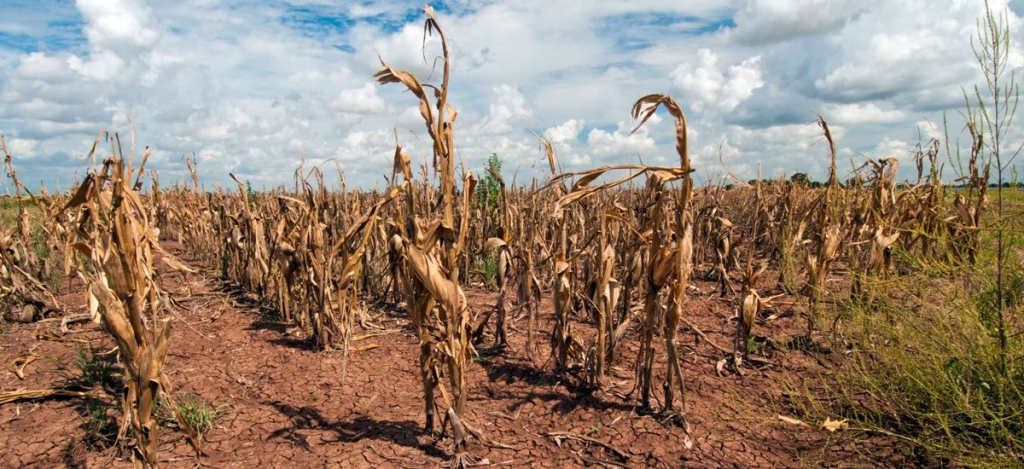
By June, the elders gathered beneath the mugumo tree to pray and pour libations. They slaughtered a white cockerel and called on the spirits, but the earth remained parched. Quietly, some began to murmur that Kirinyaga had turned its face away.
At night, Wanjiru would lie awake, her thatched roof groaning under the weight of heat, and think of her grandmother’s warning. She didn’t believe in curses—but neither could she ignore the drum’s quiet presence, as if it waited for her to decide.
The Call of the Mountain
One moonless night, Wanjiru dreamed she was walking up Mount Kenya’s slopes. The stars above seemed close enough to pluck like berries. Ahead, the mountain’s snowy peak glowed faintly. Then she heard it—a deep, resonant beat, like a heartbeat rolling through stone. It wasn’t frightening. It was a summons.
She awoke trembling. Outside, the village lay in stillness, the silence so complete even the crickets dared not sing. Her feet carried her before her mind caught up—into Nyambura’s hut, to the shelf of clay pots, to the waiting drum.
When she touched it, the cowhide was warm, pulsing faintly like a living thing.
The Night of the Drum
She took it to the village square, where the mugumo tree stood silhouetted against the stars. At first, her hands fumbled, unsure of the rhythm. But soon her palms found a pattern—soft taps, then firm beats, then a rolling thunder she didn’t recognize but somehow knew.
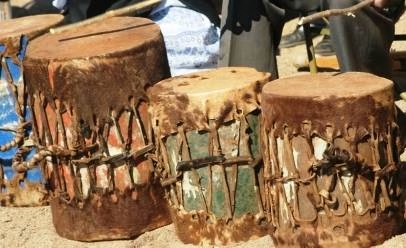
The sound didn’t just echo; it traveled, climbing up the mountain and returning as a low rumble, as if Kirinyaga itself was answering. The air thickened, heavy and electric.
Then came the clouds—fast-moving, black and swollen. Villagers emerged from their huts, eyes wide, some crossing themselves, others bowing. And within the clouds appeared figures of shimmering light: tall warriors carrying spears of flame, elders draped in ancestral cloth, and children with eyes like starlight.
A hush fell. The spirits’ voices merged into a single language, old as the soil. Only Wanjiru understood, though she’d never learned it:
“The drought is no curse of nature. It is the greed of men. Downriver, your lifeblood is stolen.”
The vision faded, but the message stayed, seared into her mind.
The March to the River
At dawn, Wanjiru called the villagers beneath the mugumo tree. Some were skeptical. “You expect us to believe a dream?” asked Karanja, a stern farmer whose land was already failing. But when Wanjiru repeated the spirits’ words—her voice trembling but steady—the elders exchanged uneasy glances. They’d heard rumors: a new factory downstream, owned by a wealthy businessman from Nairobi, had diverted the river to power his machines.
“We will go and see,” said Mzee Kamau, the oldest elder, his walking stick thumping the dry earth.
Word spread like wildfire. By midday, men, women, and children began to gather. They carried drums, sticks, and placards scrawled with charcoal: “RETURN THE RIVER” and “THE MOUNTAIN WATCHES.” Wanjiru led them, the sacred drum slung across her shoulder.
The march wound down the dusty road, past abandoned fields and cracked water pans, until the riverbed came into view—dry, a wound across the land. Further along, the factory loomed, its pipes siphoning what little water remained.
The factory gates were locked, but their noise—drums beating, voices chanting—drew attention. Workers peered nervously from windows. Wanjiru struck the sacred drum, and its sound carried like thunder. Villages from further afield, who had also suffered the drought, joined the protest.
The Reckoning
By afternoon, journalists arrived, cameras flashing. Social media lit up with images of barefoot villagers confronting polished gates. The businessman, a man named Mwangi Kihara known for his political connections, arrived in a sleek black SUV. He stepped out, confident at first—until he saw Wanjiru standing before the mugumo tree, drum in hand, and hundreds of villagers behind her.
“This is private property,” he barked.
“This is our river,” Wanjiru replied, her voice carrying across the crowd. “And the spirits of Kirinyaga are watching.”
Someone began to drum—a slow, steady beat. Others joined, the rhythm swelling until it seemed to shake the earth itself. Mwangi’s confidence faltered. Rumors of ancestral curses were not taken lightly in these hills. Under the mounting pressure—public, spiritual, and political—he relented.
“I will restore the river’s flow,” he said, voice tight. “Tomorrow.”
The villagers didn’t cheer immediately. They watched as workers opened the gates and began redirecting the water back to its natural course. Only when the first trickles returned to the dry riverbed did the crowd erupt into song.
The Rain Returns
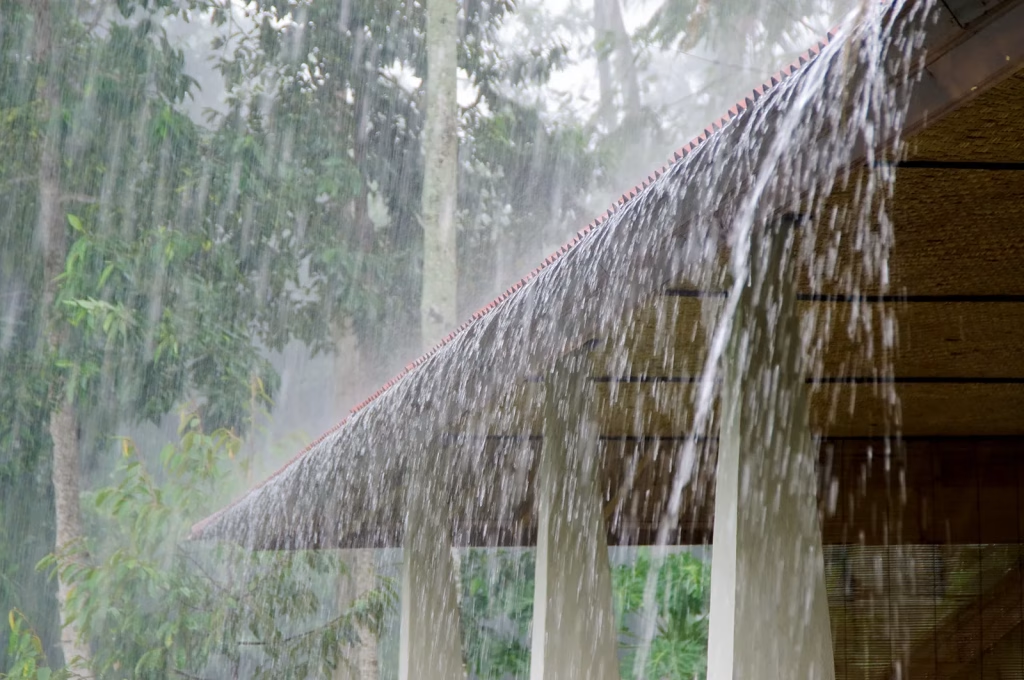
That evening, back in Kanyua, the sky darkened once more—but this time with rain clouds, fat and promising. Thunder rolled, and rain poured so heavily it drummed on rooftops like a thousand blessings. Children danced barefoot in the mud. Old women lifted their arms to the sky, tears mixing with rainwater.
Wanjiru returned the drum to Nyambura’s hut, placing it gently behind the clay pots. But as she turned to leave, a faint, almost playful rhythm pulsed from within—like a heartbeat, like a promise.
She smiled. The mountain had spoken, and she had listened.
Epilogue: The Legacy of the Drum
Years later, the story of Wanjiru and the Drums of Kirinyaga would be told in classrooms, whispered in market stalls, and sung by children beside cooking fires. It reminded the people of Kanyua—and all who heard it—that the land is alive, the mountain is watching, and even a quiet herder girl can awaken the spirits when the world grows silent. Learn more kikuyu stories https://www.youtube.com/watch?v=GECTagv4KJY
Read more stories https://www.whispers.co.ke/
